
Keibann is an online term commonly connected with visual task organization and workflow planning. It describes a simple approach where tasks are displayed clearly and moved through different stages as work progresses.
Interest in Keibann has grown because people searching for productivity methods often encounter this unusual spelling. Its similarity to Kanban, Keiban, and Japanese terms has also created curiosity about its actual meaning.
This guide explores what Keibann means, how the workflow works, its connection with Kanban, possible Japanese interpretations, key benefits, practical examples, useful tools, common mistakes, and ways to get started.
What Is Keibann?
Keibann is generally described online as a visual approach to organizing tasks, projects, and daily work. It uses boards, cards, and separate progress stages to make activities easier to see and manage.
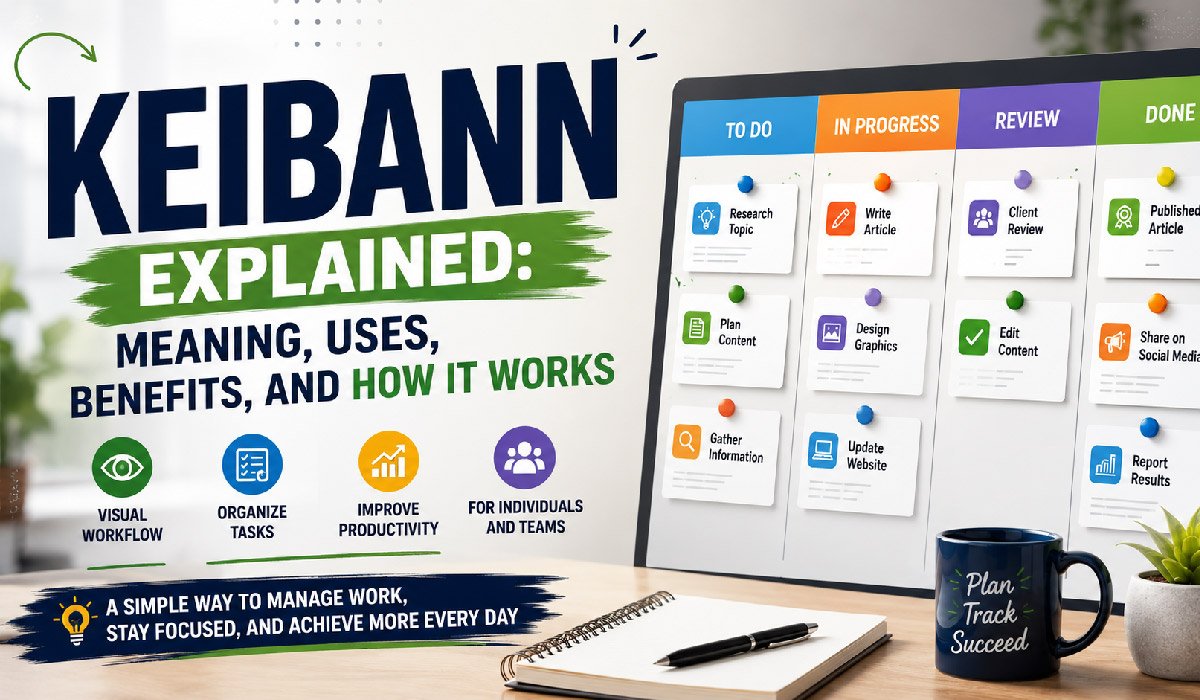
Instead of keeping every task inside a long list, users can place individual activities into columns such as To Do, In Progress, Review, and Done. Cards move forward as the work develops.
The word is also sometimes connected with Kanban and similar Japanese terms. Because these spellings are close, the meaning can change with context, making it important to understand how Keibann is being discussed.
Why Is Keibann Becoming Popular?
Keibann is attracting attention because visual organization has become useful for modern work. Students, freelancers, businesses, creators, and remote teams often manage several responsibilities at once and need a simple way to follow them.
Its unusual spelling also encourages searches. People may see Keibann while reading about productivity, workflow boards, digital tools, or Japanese terms and then search for an explanation of what the word actually represents.
Another reason is simplicity. Visual workflows do not require complicated planning. A person can quickly look at a board, identify unfinished work, find active tasks, and understand what should happen next.
Understanding the Meaning Behind Keibann
The easiest way to understand Keibann is through the idea of visible work. Instead of trying to remember everything mentally, tasks are placed somewhere they can be viewed, updated, and organized.
In productivity discussions, Keibann is closely associated with board-based task management. A basic workflow might contain four stages: To Do, In Progress, Review, and Done. Each stage represents the current position of work.
However, searches for Keibann can also lead to Kanban and Japanese vehicle terminology. These similar words have different backgrounds, so understanding their differences helps remove much of the confusion surrounding the keyword.
How Does Keibann Work?
Keibann works by turning work into a visible process. Users first create columns representing different stages of a project. Tasks are then added as individual cards and placed in the appropriate column.
For example, an article writer could create Ideas, Research, Writing, Editing, and Published columns. A new article begins under Ideas and gradually moves across the board until the entire publishing process is completed.
This movement makes progress easy to understand. Instead of repeatedly checking notes or asking for updates, users can look at the board and immediately see which tasks are waiting, active, delayed, or completed.
The Basic Structure of a Keibann Board
A simple Keibann board does not need many sections. Three basic columns—To Do, In Progress, and Done—can be enough for personal planning or a small project.
More detailed projects can include stages such as Ideas, Planned, Working, Review, Approved, and Completed. The right structure depends on how many steps normally exist between starting and finishing a task.
Each task becomes a card. That card can contain the task name, deadline, priority, responsible person, notes, or other useful details. Moving the card shows how far the work has progressed.
Task Cards and Their Purpose
Task cards are one of the most useful parts of a visual workflow. Each card represents one activity, allowing large projects to be divided into smaller pieces that are easier to understand.
For example, instead of creating one card called “Build Website,” separate cards could cover homepage design, logo creation, article writing, contact page setup, testing, and final website review.
Cards can also include deadlines, names, priorities, checklists, and short notes. This information gives users enough context to understand a task without making the main board difficult to read.
Moving Work Through Different Stages
Movement is an important part of Keibann. When work begins, its card moves from the waiting column into the active stage. When finished, it moves toward review or completion.
Consider a freelance writing project. The workflow could move from New Order to Research, Writing, Editing, Client Review, and Completed. Every movement represents a real change in the project’s status.
This system creates a simple visual history of progress. It also makes stalled work easier to notice because cards that remain in the same stage for too long quickly become visible.
Keibann and Kanban: Understanding the Connection
Keibann is often associated with Kanban because both terms appear in discussions about visual task organization. Kanban is the established workflow method and has a much clearer historical and professional background.
Kanban uses visual boards and cards to represent work. It also focuses on controlling work in progress, improving flow, finding bottlenecks, and continuously improving how tasks move through a working system.
Keibann is generally used in a simpler sense around visual organization and task tracking. Therefore, people searching for Keibann may actually be looking for ideas or methods closely related to Kanban.
How Keibann Differs From Kanban
The biggest difference is their background. Kanban is an established management method with principles that go beyond moving cards between columns. It developed from manufacturing practices and later became popular across many industries.
Keibann is better understood as an emerging online term associated with simpler visual organization. Its discussions commonly focus on boards, cards, task stages, personal planning, and straightforward progress tracking.
In everyday use, both may look similar because a board can contain columns and movable cards. However, a complete Kanban system can involve workflow policies, work limits, flow measurement, and continuous process improvement.
The Japanese Connection Behind Similar Terms
Part of the confusion surrounding Keibann comes from Japanese words with similar Romanized spellings. Kanban is a Japanese word commonly associated with signs, boards, and the workflow method that later became internationally popular.
Another nearby subject is Japan’s kei vehicle category. Kei cars and kei vans are compact vehicles designed around specific Japanese regulations and are widely recognized for their small size and practical design.
Because words can appear differently when Japanese terms are written using the Latin alphabet, searches involving Keibann, Keiban, kei van, and Kanban can overlap. Context usually reveals whether the subject is productivity or vehicles.
Is Keibann Related to Japanese Kei Vans?
Keibann can sometimes appear around searches connected with Japanese compact vehicles. In this situation, the user may actually be looking for information about a “kei van” rather than a workflow system.
Kei vans belong to Japan’s kei vehicle category. They are compact, lightweight vehicles commonly valued for transportation, deliveries, business use, and driving through narrow urban areas where larger vehicles can be less convenient.
Therefore, an automotive page using a similar-looking expression should not automatically be connected with task management. The words around Keibann are important for identifying whether the intended subject is vehicles or workflow organization.
Main Features of the Keibann Approach
Visual task tracking is the central feature of Keibann. Tasks remain visible instead of disappearing inside lengthy documents, messages, or mental reminders. Users can quickly understand the overall condition of their work.
Another useful feature is flexibility. A board can contain only three columns or several detailed stages. Individuals can build a simple personal board, while teams can create a workflow that matches their working process.
Keibann also supports regular updates. Cards can move whenever progress occurs, allowing the board to reflect current work. This creates a more useful picture than a task list that is rarely updated.
Benefits of Using Keibann
Better organization is one of the main benefits. Keeping tasks in visible stages makes it easier to separate upcoming work from active and completed activities. Users know where each responsibility currently stands.
Keibann can also improve focus. Seeing too many cards in the active column may show that a person is trying to handle too much simultaneously. They can finish existing work before beginning additional tasks.
For teams, the approach can improve communication. Members can see which tasks are active, who is responsible, and what has already been completed without repeatedly asking everyone for individual progress updates.
Keibann for Personal Task Management
Keibann does not need to be limited to professional projects. Individuals can create boards for household responsibilities, shopping, personal goals, fitness routines, travel planning, or other everyday activities.
A personal board might contain This Week, Today, Doing, and Finished. Tasks such as paying a bill, buying groceries, booking an appointment, or completing household work can move through these stages.
The system works best when it remains simple. Personal planning rarely needs dozens of categories. A small number of meaningful columns can provide enough structure while keeping daily task management quick and comfortable.
How Students Can Use Keibann
Students can use Keibann to organize homework, assignments, examinations, reading, and research projects. Separate cards prevent different academic responsibilities from becoming mixed together or forgotten.
A student could create Upcoming, Studying, Waiting for Review, and Completed columns. Cards might include “Read Chapter Five,” “Prepare Science Presentation,” “Revise Mathematics,” or “Submit History Assignment.”
Deadlines can be added to important cards so urgent work receives attention first. This creates a simple study dashboard where students can see both their current workload and completed academic progress.
How Freelancers Can Use Keibann
Freelancers often manage several clients, deadlines, revisions, and payments simultaneously. A visual board can separate each stage and provide a clearer picture of where every project currently stands.
For example, columns could include New Lead, Proposal Sent, Accepted, Working, Client Review, Revision, and Completed. Each client project becomes a card that moves through these stages as work develops.
This approach can also help freelancers identify delays. If several cards remain under Client Review or Revision, they immediately know which part of their workflow requires follow-up before accepting additional work.
Using Keibann for Content Creation
Content creators can build a Keibann board around their publishing process. Blog articles, videos, social posts, podcasts, and other content can each be represented by individual cards.
A blogging workflow might include Keyword Ideas, Research, Drafting, Editing, Images, Scheduled, and Published. Writers can move every article through the same stages, making their editorial process easier to follow.
Important details such as focus keywords, publishing dates, writers, or content categories can also be stored inside cards. This creates one visual location for managing multiple pieces of content without relying on scattered notes.
Keibann for Businesses and Teams
Businesses can adapt Keibann-style boards to marketing, sales, product development, customer service, administration, and other daily operations. Each department can design stages that match its actual working process.
A marketing team might use Ideas, Planned, Creating, Approval, Scheduled, and Live. A customer support team could instead organize requests as New, Investigating, Waiting, Resolved, and Closed.
The board provides a shared picture of work. Team members can understand priorities and responsibilities more easily, while managers can identify tasks that are progressing slowly or creating delays for other activities.
Popular Tools for Creating a Keibann-Style Board
Several existing productivity tools can be used to create this type of visual workflow. Trello is popular for simple card-based boards, while Notion combines boards with documents, databases, and other planning features.
Asana and ClickUp provide broader project management features for individuals and teams. Jira is commonly associated with software and development workflows where projects may require more detailed tracking and management.
Physical tools remain useful as well. Sticky notes on a wall or cards on a whiteboard can create an effective visual workflow. The method matters more than whether the board is digital or physical.
How to Create Your First Keibann Board
Start by choosing one project instead of placing every responsibility on a single board. Decide which stages accurately describe the journey between receiving a task and completing it.
Next, create your columns and add current tasks as cards. Give every card a clear name. Add deadlines, priorities, owners, or notes only when those details genuinely help you complete the work.
Finally, update the board as work changes. Move cards immediately when tasks begin or finish. Review unfinished items regularly and remove unnecessary work so the board continues representing your actual responsibilities.
Keeping the Workflow Simple
A common mistake when building a visual system is adding too many columns. Every additional stage creates another decision, so complicated boards can eventually become harder to maintain than ordinary task lists.
Begin with To Do, In Progress, and Done. Add another stage only when it represents an important part of your real process, such as Review or Client Approval.
Cards should also remain manageable. Instead of putting an enormous project on one card, divide it into practical tasks. Smaller activities move more frequently and provide a clearer picture of genuine progress.
Managing Work in Progress
One useful idea connected with Kanban-style workflows is controlling how much work remains active at once. Starting many tasks can create the appearance of productivity while actually slowing down completion.
For example, if ten articles are simultaneously in Writing but none reaches Editing, the active workload may be too large. Completing several existing drafts before beginning new ones can improve overall flow.
A Keibann-style board makes this situation visible. When one column becomes crowded, users can focus on moving current tasks forward instead of continuously adding new activities that increase unfinished work.
Finding Delays and Bottlenecks
A bottleneck occurs when work repeatedly builds up at one stage. Visual boards make these problems easier to notice because cards begin collecting in the same column.
Imagine a publishing workflow where articles move quickly through Writing but remain in Editing for several days. The board shows that writing is not the main problem; the editing stage requires attention.
Users can then investigate the cause. There may be too much work, unclear responsibilities, slow approvals, or insufficient resources. Identifying the real problem helps improve the entire workflow rather than simply working faster.
Common Keibann Mistakes to Avoid
One mistake is creating a board and then failing to update it. Outdated cards make the workflow unreliable because the information displayed no longer matches the real status of the project.
Another problem is adding every possible task. An overloaded board can become visually stressful and make priorities difficult to recognize. Old, unnecessary, or low-value tasks should be reviewed and removed when appropriate.
Users should also avoid creating unclear cards. Names such as “Work on project” provide little direction. Specific cards such as “Write homepage introduction” clearly explain what action needs to be completed.
Is Keibann a Website or Software?
Keibann is better understood from the available context as an online keyword or workflow-related expression rather than the name of one specific productivity application that everyone using the term is referring to.
This distinction matters because searches for Keibann can produce different explanations. Some pages discuss productivity concepts, while similar spellings can lead users toward Kanban boards, digital tools, brands, or Japanese vehicle terminology.
Users looking for a visual workflow do not need special Keibann software. Existing board tools such as Trello, Notion, Asana, ClickUp, or Jira can provide the practical features needed for this approach.
Is Keibann Worth Using?
The visual organization approach associated with Keibann can be useful when people struggle to understand what work is waiting, active, delayed, or completed. Its greatest strength is making progress visible.
It can work particularly well for students, freelancers, writers, creators, small businesses, and teams with repeatable processes. A carefully designed board can reduce confusion without requiring a complicated management system.
However, the board itself does not complete the work. Users still need realistic priorities, regular updates, clear responsibilities, and consistent action. Keibann becomes useful when it supports good working habits rather than replacing them.
Final Thoughts
Keibann is an interesting online keyword most commonly explained through visual task organization, where boards, cards, and progress stages help users understand their work. Its similarity to Kanban explains much of the interest surrounding it.
The term can also become confusing because similar spellings appear around Japanese words and kei vehicles. Looking at the surrounding subject is therefore the easiest way to understand what a particular use of Keibann means.
For productivity, the practical idea remains simple: make tasks visible, organize them into meaningful stages, limit unnecessary active work, and update progress regularly. This approach can make personal and professional projects easier to understand and manage.
FAQs
Is Keibann the Same as Kanban?
Keibann and Kanban are closely associated in online discussions, but they should not be treated as identical terms. Kanban is the established workflow method, while Keibann is commonly used around simpler visual task organization concepts.
What Does Keibann Mean?
Keibann generally refers to an online term associated with visual workflow organization. It can describe using boards, cards, and progress stages to organize tasks, although similar spellings may have different meanings depending on context.
How Does Keibann Work?
Keibann-style task management places individual tasks on a visual board. Cards move through stages such as To Do, In Progress, Review, and Done, allowing users to quickly understand the current status of their work.
Is Keibann Related to Japanese Cars?
The similar spelling can sometimes lead to Japanese vehicle searches, particularly kei vans and kei cars. In automotive contexts, the intended subject may be Japan’s compact kei vehicle category rather than a task-management workflow.
Can I Use Keibann for Personal Tasks?
Yes. The visual workflow approach can organize study plans, household work, freelance projects, content creation, personal goals, and daily responsibilities. A simple board with a few clear stages is usually enough to get started.
Latest News And Amazing News. Visit: Insider Zine