

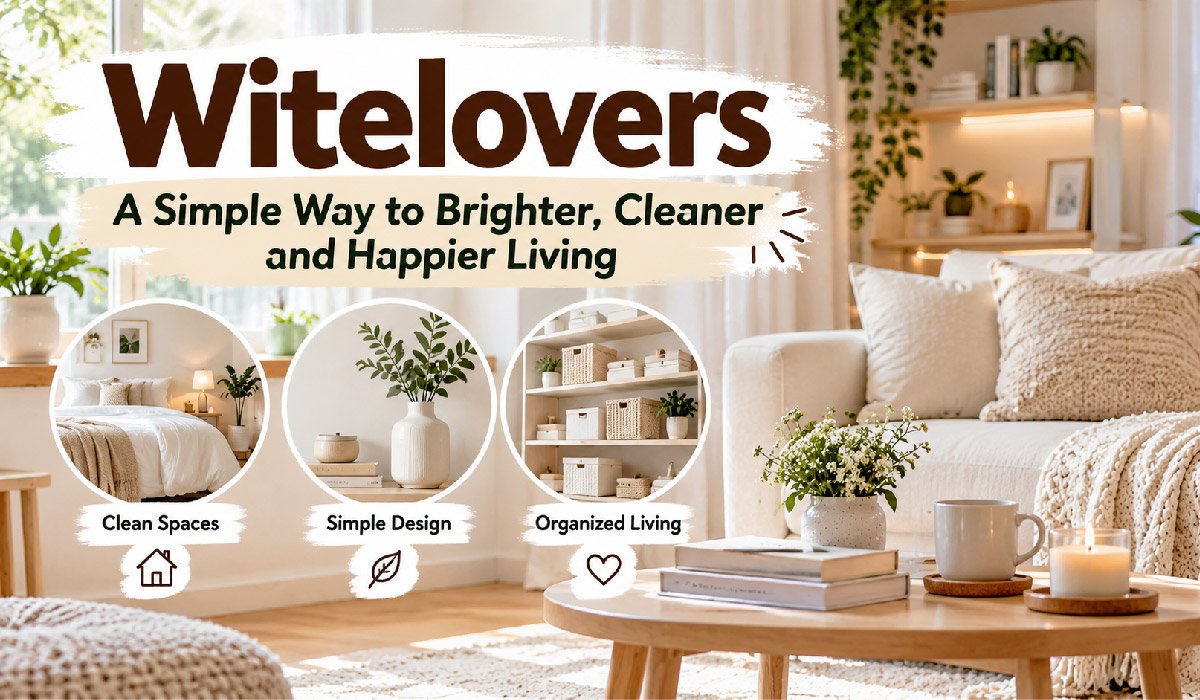
Witelovers is an informal online term commonly connected with clean spaces, neutral colors, simple design, organization, and minimalist-inspired living. It does not have one official definition or a fixed set of rules. Instead, the meaning has developed through online lifestyle discussions, design content, and different interpretations of the term.
In its most common lifestyle use, Witelovers describes an interest in bright and visually uncluttered surroundings. White, cream, beige, light gray, and natural colors often appear in this aesthetic. Simple furniture, natural light, practical storage, soft textures, and carefully selected decorations are also commonly associated with the idea.
However, Witelovers should not be treated as an established design movement. There is no clearly documented organization controlling the term or recognized founder defining how people should use it. It is better understood as a flexible online aesthetic that overlaps with minimalism, simple living, neutral interior design, organization, fashion, and photography.
Where Did Witelovers Come From?
The exact origin of Witelovers remains unclear. There is no reliably documented creator, founder, launch date, or original source that proves exactly when or where the term first appeared. Different online articles provide different explanations, which makes it difficult to establish one historical meaning with confidence.
One possible explanation connects the spelling with the words “white lovers.” This interpretation appears reasonable because white and other light colors are strongly associated with the aesthetic. However, there is not enough reliable evidence to establish this explanation as the confirmed origin of the word, so it should be treated as a possibility rather than fact.
What is clearer is the way Witelovers is currently used. Its modern lifestyle meaning usually revolves around visual simplicity, clean spaces, organization, neutral colors, and intentional choices. The present use of the term is therefore easier to explain than its uncertain linguistic history.
Why Is the Meaning of Witelovers Unclear?
Witelovers is difficult to define because it does not have a standard reference definition. Established design movements normally have documented histories, influential designers, recognizable principles, or well-established meanings. Witelovers currently lacks this level of formal documentation, allowing different publishers and online users to interpret the term differently.
Some descriptions focus almost completely on interior design, while others connect Witelovers with fashion, photography, simple living, workspaces, digital organization, or online identity. These interpretations often overlap, but they are not identical. The context in which the word appears therefore matters when trying to understand its meaning.
This is common with internet vocabulary. New expressions can spread through blogs, captions, usernames, images, communities, and social content before receiving a stable definition. Repetition across many websites also does not automatically prove that an explanation is correct, especially when the original source of a claim cannot be identified.
Is Witelovers a Lifestyle or an Aesthetic?
Witelovers is most accurately understood as an emerging online aesthetic or lifestyle label rather than a formal lifestyle movement. Its strongest characteristics are visual, including light colors, organized surroundings, simple layouts, uncluttered surfaces, natural materials, and a general preference for clean presentation.
The lifestyle interpretation becomes broader when these ideas influence everyday choices. Someone interested in Witelovers may organize possessions more carefully, avoid unnecessary purchases, create simple routines, maintain a smaller wardrobe, or keep a cleaner workspace. None of these practices are official requirements, but they fit the wider theme of simplicity.
People can therefore use Witelovers differently. One person may apply it only to interior design, while another may extend the idea to clothing, photography, work, or organization. Because there is no recognized rulebook, the aesthetic can be adapted according to individual needs rather than followed as a strict system.
Witelovers vs Minimalism
Witelovers and minimalism share many characteristics, but they should not be treated as the same concept. Minimalism has a much longer history and appears across art, architecture, interior design, fashion, consumption, and lifestyle. Its broader principle usually involves reducing excess and giving greater importance to purpose and function.
Witelovers has a stronger association with visual presentation. Light colors, bright rooms, clean surfaces, neutral furniture, and soft natural materials frequently appear in descriptions of the aesthetic. A minimalist interior, by comparison, does not need to use white or neutral colors to qualify as minimalist.
The difference is useful because someone can enjoy Witelovers without following strict minimalism. A Witelovers-inspired home can contain books, artwork, family photographs, plants, souvenirs, and useful possessions. The objective is generally to organize these elements carefully so the space feels balanced rather than empty.
Witelovers vs Scandinavian and Japandi Design
Scandinavian design shares several visual characteristics with Witelovers, particularly light interiors, practical furniture, simple forms, and natural materials. Scandinavian interiors frequently combine pale walls with wood, textiles, functional storage, and comfortable furniture, making some rooms visually similar to the Witelovers aesthetic.
Japandi also overlaps with the concept. It combines influences associated with Japanese restraint and Scandinavian functionality, often using natural materials, muted colors, uncluttered layouts, and carefully selected objects. Witelovers can borrow similar elements without becoming another name for Japandi.
The important difference is that Scandinavian and Japandi design have more established design contexts. Witelovers remains a loosely defined internet expression. It is therefore better to see similarities between these aesthetics instead of treating them as interchangeable names for exactly the same design philosophy.
What Does the Witelovers Aesthetic Look Like?
A Witelovers-inspired space normally looks bright, organized, open, and visually simple. Surfaces are not filled with unnecessary objects, furniture has a clear purpose, and decorations are selected carefully. Empty space is also important because every wall, shelf, table, or corner does not need to contain something.
Natural light can strongly influence this appearance. Open curtains, unobstructed windows, light-colored walls, and suitable furniture placement can help daylight move through a room. Where natural light is limited, soft artificial lighting can create warmth without making the room feel visually heavy.
The aesthetic should not make a home feel empty or unfinished. Plants, books, artwork, photographs, cushions, rugs, ceramics, and other personal objects can remain. The main principle is visual balance: objects should contribute to the room instead of making every available surface feel crowded.
The Witelovers Color Palette
White is strongly associated with Witelovers, but an entirely white home is not necessary. Warm white, off-white, ivory, cream, beige, sand, pale taupe, and light gray can create a similar neutral foundation. Natural wood tones can then introduce warmth and prevent the space from appearing flat.
Small amounts of contrast can also improve a neutral room. Green plants, darker picture frames, muted artwork, black lighting fixtures, or deeper wood tones can create visual definition. The objective is not to eliminate every strong color but to maintain a balanced overall composition.
Layering related shades usually creates a more comfortable result than using one identical white tone everywhere. For example, warm white walls can work with a cream sofa, beige rug, oak table, linen curtains, green plant, and darker lamp while still maintaining a recognizable Witelovers appearance.
Materials and Textures in Witelovers Design
Texture is important because a room dominated by pale colors can otherwise feel cold. Natural wood is particularly useful because it introduces warmth while remaining visually simple. Wooden tables, shelves, chairs, trays, or decorative objects can fit naturally into a neutral interior.
Soft materials provide another layer. Cotton curtains, linen bedding, woven baskets, wool rugs, textured cushions, and comfortable throws can make simple spaces feel more inviting. Ceramic, stone, glass, and subtle metal details can provide additional contrast without making the room look overcrowded.
Plants are also useful because natural green works well against white and neutral backgrounds. The aim is not to collect large numbers of decorative items. A few carefully selected materials and textures can give the room character while preserving its clean and organized appearance.
How to Create a Witelovers-Inspired Home
Creating a Witelovers-inspired home does not require replacing everything you own. A better starting point is to examine the existing room and identify unnecessary visual clutter. Objects that are rarely used, duplicated, poorly placed, or permanently covering useful surfaces can be reorganized, stored, donated, sold, or removed.
The next step is improving the relationship between the objects that remain. Furniture can be rearranged to improve movement and natural light. Frequently used possessions should remain accessible, while less frequently used items can be placed in suitable storage. Leaving some surfaces partly empty can immediately make the room appear calmer.
Only after organizing the existing space should new purchases be considered. A rug, lamp, storage basket, curtain, plant, or other practical item may improve the room, but buying large amounts of new neutral décor simply to imitate an online aesthetic works against the wider idea of intentional living.
Witelovers Living Room Ideas
A Witelovers living room should first function as a comfortable place for everyday activities. The sofa, chairs, tables, and storage should be positioned so people can sit, move, talk, read, relax, or watch television comfortably. Practical use should always come before creating a perfect photograph.
Neutral foundations can make the living room visually consistent. A cream or beige sofa, light walls, natural wood furniture, simple curtains, and a soft rug can create the base. Plants, artwork, cushions, books, or family photographs can then provide personality and contrast.
Avoid filling every table and shelf with decorative objects. One larger artwork, a plant, several meaningful books, or a ceramic object can often create stronger visual impact than many unrelated decorations. Witelovers works best when each visible item appears intentional without making the room feel staged.
Witelovers Bedroom Ideas
A bedroom is particularly suitable for the Witelovers aesthetic because the room normally benefits from simple organization. Neutral bedding in white, cream, beige, or soft gray can establish the main color palette without requiring major changes to furniture or walls.
Bedside tables should remain useful rather than completely empty. A lamp, book, phone charger, photograph, or small personal item can stay if it serves a purpose. Clothes, papers, cables, and objects that do not belong beside the bed can be moved into drawers, wardrobes, baskets, or other storage.
Soft textures are especially important in bedrooms. Bedding, curtains, cushions, rugs, and throws can make a neutral space comfortable instead of clinical. The final room should feel personal and easy to maintain rather than looking like an unused showroom.
Witelovers Kitchen Ideas
A Witelovers-inspired kitchen focuses heavily on function and organization. Kitchen counters should provide enough working space for preparing food, so appliances and objects that are rarely used do not need to remain permanently visible. Frequently used items, however, should remain convenient to access.
Cabinets, drawers, shelves, containers, and storage areas can be organized according to how often different items are needed. Grouping similar tools and ingredients together can also make the kitchen easier to use. Organization matters more than simply hiding everything behind closed doors.
Light surfaces, natural wood, simple hardware, and practical storage can support the aesthetic, but a kitchen does not need renovation to achieve the general idea. Cleaning counters, reorganizing cupboards, improving lighting, and removing unnecessary objects can already create a noticeable difference.
Witelovers Workspace and Desk Setup
A Witelovers workspace should prioritize productivity and comfort over appearance. Computers, notebooks, chargers, pens, headphones, documents, and other essential equipment should remain available when they are genuinely needed. Removing useful tools just to make a desk look empty can make the workspace less practical.
Cable management and designated storage can make a significant visual difference. Chargers can have a specific location, documents can be organized into folders, and stationery can remain together. Less frequently used equipment can be stored in drawers or cabinets instead of occupying permanent desk space.
The finished workspace can still include personality. A plant, photograph, small artwork, wooden accessory, or desk lamp can provide warmth. The objective is to create enough clear working space while ensuring everything required for regular work remains accessible.
Witelovers Ideas for Small Spaces
Witelovers principles can work particularly well in small rooms because excessive furniture and visual clutter can make limited spaces feel crowded. The first priority should be choosing furniture that fits the actual size of the room rather than filling every available area.
Useful storage can help manage possessions without sacrificing floor space. Under-bed storage, shelves, drawers, baskets, wardrobes, and multifunctional furniture may help depending on the room. Light colors and unobstructed windows can also contribute to a more open visual appearance.
People living in apartments, dormitories, rented homes, or small bedrooms do not need permanent renovations. Rearranging furniture, improving organization, reducing unnecessary objects, changing bedding, or introducing a few coordinated accessories can create the aesthetic without making structural changes.
Witelovers and Decluttering
Decluttering is frequently associated with Witelovers, but it should not mean throwing away everything. Possessions can have practical, financial, sentimental, or personal importance. Books, gifts, photographs, clothing, souvenirs, collections, artwork, and handmade objects can remain part of a clean and organized home.
A more practical method is to separate belongings according to purpose. Items can be classified as frequently used, personally meaningful, suitable for donation, suitable for sale, ready for disposal, or uncertain and requiring later review. This approach makes decluttering more deliberate.
The purpose is to remove unnecessary clutter rather than personality. If an object is meaningful and the owner genuinely wants it, the solution may simply be finding an appropriate place for it. Witelovers should make belongings easier to enjoy, locate, and use rather than forcing people to discard them.
Witelovers and Simple Living
The lifestyle side of Witelovers extends beyond decorating rooms. Simple living can involve thinking more carefully about what enters the home, wardrobe, workspace, schedule, and digital environment. Buying fewer unnecessary products can prevent clutter from returning after a room has been organized.
Intentional purchasing is especially relevant. Before buying something, a person can consider whether the item serves a purpose, fits the available space, works with existing possessions, and is likely to remain useful. This can be more practical than repeatedly purchasing products because they temporarily match an aesthetic trend.
Simple routines can support the same approach. Returning items after use, keeping frequently needed objects accessible, maintaining storage areas, clearing surfaces regularly, and dealing with unwanted belongings before they accumulate can make an organized home easier to maintain over time.
Witelovers in Fashion
Witelovers can extend into fashion through neutral colors, clean silhouettes, versatile clothing, and simple combinations. White shirts, cream sweaters, beige trousers, neutral jackets, basic footwear, and restrained accessories can create a wardrobe where many pieces work together easily.
This approach overlaps with capsule wardrobes, which generally focus on maintaining a smaller collection of versatile clothing. However, the two terms should not be treated as identical. Capsule wardrobes existed independently and have their own broader context, while Witelovers is a newer and less clearly defined label.
A neutral wardrobe also does not need to eliminate personality. Texture, jewelry, bags, shoes, watches, muted colors, or occasional stronger pieces can provide contrast. As with interiors, the main idea is consistency and usability rather than following an inflexible color rule.
Witelovers in Photography and Social Media
Photography is another area where the Witelovers aesthetic can be applied. Bright backgrounds, soft lighting, negative space, limited colors, natural materials, and fewer distracting objects can produce clean compositions where the main subject remains easy to identify.
This approach can work for lifestyle photography, interior images, fashion content, product photographs, blogs, and social media. For example, a desk photograph may focus on a laptop, notebook, lamp, and plant instead of including every object normally stored around the workspace.
Minimal photography should not be confused with empty photography. Good composition still requires a clear subject, visual hierarchy, lighting, texture, and balance. There is also no reliable evidence establishing that Witelovers originated on one specific social platform, so claims about a particular platform creating the term should be treated cautiously.
Witelovers in Digital Life
The broader principles of Witelovers can also be applied to digital organization. Computers and phones often collect unused applications, duplicate files, screenshots, downloads, old documents, and unnecessary notifications. Organizing these items follows the same general idea of reducing avoidable clutter.
Digital folders can be arranged by purpose, unused applications can be removed, important documents can receive clear names, and unnecessary notifications can be disabled. A simple desktop background and organized home screen can also make frequently used tools easier to locate.
These practices should not be described as official Witelovers rules because no such rulebook exists. They are simply practical examples of applying the wider principles of organization, simplicity, and intentional use to digital environments as well as physical spaces.
Can Witelovers Create a Calmer Environment?
Many people find clean and organized environments visually pleasant, which helps explain the connection between Witelovers and calm spaces. Fewer unnecessary objects can make surfaces easier to use, while organized storage can make possessions easier to locate during everyday activities.
However, Witelovers should not be presented as a treatment for stress, anxiety, burnout, or any other health condition. There is no basis for claiming that white walls, neutral furniture, or a particular aesthetic will automatically improve mental health or guarantee better concentration.
The more practical point is that a well-organized environment can make certain everyday tasks simpler. People have different preferences, however, and some may feel more comfortable surrounded by bright colors, books, collections, artwork, or other visually rich elements.
Can Witelovers Work in a Family Home?
A family home does not need to look permanently perfect to use Witelovers principles. Children, pets, toys, school supplies, shoes, dishes, electronics, clothes, and everyday household items are part of normal life. The goal should be to manage these objects rather than pretend they do not exist.
Simple systems can make busy homes easier to reset. Toys can have baskets, shoes can have a designated location, school documents can stay together, and frequently used supplies can have accessible storage. Family members are more likely to maintain organization when storage is simple and practical.
Materials should also suit real household needs. Washable fabrics, durable furniture, practical rugs, and easy-to-clean surfaces may be more sensible than delicate white furnishings. Family photographs, children’s artwork, books, toys, and colorful objects can remain because a home should serve its residents before serving an aesthetic.
Does Witelovers Have to Be Expensive?
Witelovers does not require luxury furniture, expensive renovations, or designer products. Some of the most noticeable changes can be achieved by organizing existing possessions, cleaning surfaces, opening curtains, moving furniture, improving storage, and removing objects that no longer serve a purpose.
Existing furniture can also be reused. A wooden table does not need replacing simply because a different table appears in an online inspiration photo. Keeping useful possessions can actually fit the wider principle of intentional consumption better than constantly replacing functional items.
People can therefore apply the aesthetic in rented properties, small apartments, dormitories, family homes, and limited budgets. The focus should remain on organization, balance, function, lighting, and thoughtful choices rather than the price of individual products.
Benefits of a Witelovers-Inspired Approach
One practical advantage of Witelovers is visual consistency. A limited palette can make furniture, textiles, and decorations easier to combine. Neutral foundations can also allow artwork, plants, cushions, or seasonal decorations to change without requiring an entirely new room design.
Organization can provide additional practical advantages. When possessions have designated places, they may become easier to locate and return after use. Fewer unnecessary objects on working surfaces can also provide more usable space on desks, tables, kitchen counters, and shelves.
The approach can also encourage more deliberate purchasing decisions. Instead of buying objects simply to fill empty areas, people can consider function, durability, size, compatibility, and personal value. These are practical design and organization benefits rather than guaranteed psychological or medical outcomes.
Disadvantages and Limitations of Witelovers
Witelovers is not suitable for every person or household. White furniture, walls, rugs, and fabrics can show stains, dust, fingerprints, and marks more easily than some darker alternatives. Maintaining a very light interior may therefore require more frequent cleaning.
Too much neutrality can also create a room that feels cold or impersonal. Removing too many possessions can make everyday life less convenient if frequently used items become difficult to access. An attractive room should still provide adequate storage, seating, lighting, and practical surfaces.
Another problem occurs when people spend excessively to imitate perfect online interiors. Replacing functional furniture simply because its color does not match a trend can conflict with intentional consumption. Witelovers is most useful when adapted to existing needs rather than treated as a standard every home must copy.
Common Witelovers Mistakes
One common mistake is assuming everything must be pure white. Using identical white tones across walls, furniture, rugs, curtains, and accessories can make a room appear flat. Layering cream, beige, wood, gray, green, and textured materials usually creates more visual depth.
Another mistake is confusing simplicity with emptiness. Removing useful furniture, storage, books, personal photographs, or everyday equipment simply to create an uncluttered photograph can reduce the room’s functionality. Negative space is useful, but a home still needs to support everyday activities.
People should also avoid copying social media interiors exactly. Photos may be carefully arranged before publication and may not show cables, toys, laundry, paperwork, chargers, or other normal household objects. A successful Witelovers space should be maintainable during real daily life.
How to Try Witelovers Without Redesigning Your Home
The easiest way to experiment with Witelovers is to choose one small area. A desk, shelf, bedside table, kitchen counter, or reading corner provides enough space to test whether the aesthetic actually suits your preferences before making larger changes.
Remove the objects from that area, clean it, and decide which items genuinely belong there. Return frequently used or meaningful objects first. Store less important items elsewhere and leave some open space. Existing light colors, wood, plants, or textiles can then be used to create balance.
Live with the changed space before purchasing anything new. If it becomes easier to use and maintain, the same process can gradually be applied elsewhere. This slower method prevents unnecessary spending and makes the final home more personal.
Is Witelovers the Same as “White Lovers”?
Some online interpretations connect Witelovers with the phrase “white lovers,” particularly because white and neutral colors are strongly associated with its most common lifestyle meaning. The spelling makes this explanation understandable, but similarity alone is not enough to establish a word’s historical origin.
There is currently no strong authoritative evidence proving that “white lovers” is the official etymology. Competing explanations can also be found online, demonstrating why uncertain claims should not be repeated as established history without a reliable original source.
It is therefore safer to say that Witelovers is commonly associated with white and light aesthetics while its exact linguistic origin remains uncertain. Its current usage is considerably easier to describe than the history behind its name.
Is Witelovers a Brand or Official Movement?
There is no clear evidence establishing one universally recognized company, organization, or design institution that owns and defines Witelovers as a general concept. Likewise, there is no recognized rulebook that determines who can follow the aesthetic or what every Witelovers space must contain.
The term currently works better as a flexible online label connected with design and lifestyle ideas. A particular website, username, company, or community may separately use the same name, but that use should be evaluated within its own context.
This distinction is important when encountering Witelovers online. The surrounding page, profile, article, or community should be examined before automatically assuming the term refers to minimalist interiors, because internet names can be used independently by unrelated people or organizations.
What Witelovers Does Not Mean
Witelovers does not mean that every wall, piece of furniture, and object must be white. It does not require people to throw away meaningful possessions, remove family photographs, avoid all bright colors, or live in an almost empty room.
It also does not require expensive furniture or a complete home renovation. Organization, suitable storage, natural light, existing furniture, thoughtful placement, and a consistent palette can often produce a stronger result than purchasing many new decorative products.
Most importantly, Witelovers should not be presented as a scientifically established wellness program, medical treatment, formal design school, or lifestyle system with proven health effects. It is better understood as a loosely defined online aesthetic whose strongest themes are simplicity, visual balance, organization, and neutral design.
Is Witelovers Worth Trying?
Witelovers may appeal to people who enjoy neutral colors, organized rooms, natural light, functional furniture, open surfaces, and relatively restrained decoration. Its flexible nature means that people can borrow individual ideas without adopting the entire aesthetic.
People who prefer colorful rooms, large book collections, layered patterns, bold artwork, vintage pieces, or maximalist interiors do not need to abandon those preferences. Some Witelovers principles, such as better storage or thoughtful purchasing, can still be useful without changing a person’s preferred visual style.
The most practical approach is therefore selective. Use the ideas that make the home easier to live in and ignore those that do not. A successful space should represent the needs and personality of the people using it rather than simply matching an internet trend.
The Future of Witelovers
It is difficult to predict whether the word Witelovers itself will remain widely used because internet terminology can change quickly. New aesthetic labels regularly appear, evolve, overlap with existing concepts, and sometimes disappear as online communities move toward different vocabulary.
The principles currently associated with Witelovers are broader than the name itself. Neutral interiors, functional furniture, simple living, decluttering, natural materials, organization, intentional purchasing, and visually balanced spaces already exist independently of this particular internet term.
For that reason, Witelovers may continue evolving rather than developing one fixed definition. Its future meaning will depend on how people use the term, but writers and readers should continue distinguishing current usage from unsupported claims about its history or supposed official rules.
Final Thoughts
Witelovers is best understood as an emerging and loosely defined online term associated with clean design, neutral colors, organized surroundings, minimalist-inspired interiors, simple living, and visual balance. Its exact origin remains uncertain, and there is no confirmed founder, universal definition, or formal organization controlling the concept.
The most useful part of Witelovers is its flexibility. People can use neutral colors, improve storage, reduce unnecessary visual clutter, make better use of natural light, organize workspaces, and make more deliberate purchasing decisions without turning their homes into completely white or empty spaces.
Ultimately, Witelovers should provide inspiration rather than strict rules. A practical home still needs comfort, personality, useful belongings, suitable furniture, and signs of everyday life. The strongest interpretation of the aesthetic is therefore not perfection, but creating a simple and balanced environment that works for the people living in it.
(FAQs) About Witelovers
What is Witelovers?
Witelovers is an informal online term linked with clean design, neutral colors, organized spaces, and simple living. It commonly describes minimalist-inspired interiors and lifestyles focused on simplicity, function, and visual balance.
What does Witelovers mean in simple words?
Witelovers means enjoying clean, simple, and organized surroundings. The aesthetic commonly uses white, cream, beige, gray, natural wood, simple furniture, natural light, and fewer unnecessary decorations.
Is Witelovers the same as minimalism?
No. Witelovers and minimalism share ideas such as simplicity and less clutter, but they are not identical. Minimalism is an established concept, while Witelovers is a newer, loosely defined online aesthetic.
Does a Witelovers home have to be completely white?
No. A Witelovers home can include cream, beige, gray, natural wood, muted colors, plants, artwork, and darker accents. The main idea is to maintain a clean, balanced, and uncluttered appearance.
Where did Witelovers originate?
The exact origin of Witelovers is unclear. There is no reliably documented founder, creator, or official launch date. It is best understood as an emerging internet term associated with clean aesthetics and simple living.
Latest News And Amazing News. Visit: Insider Zine