

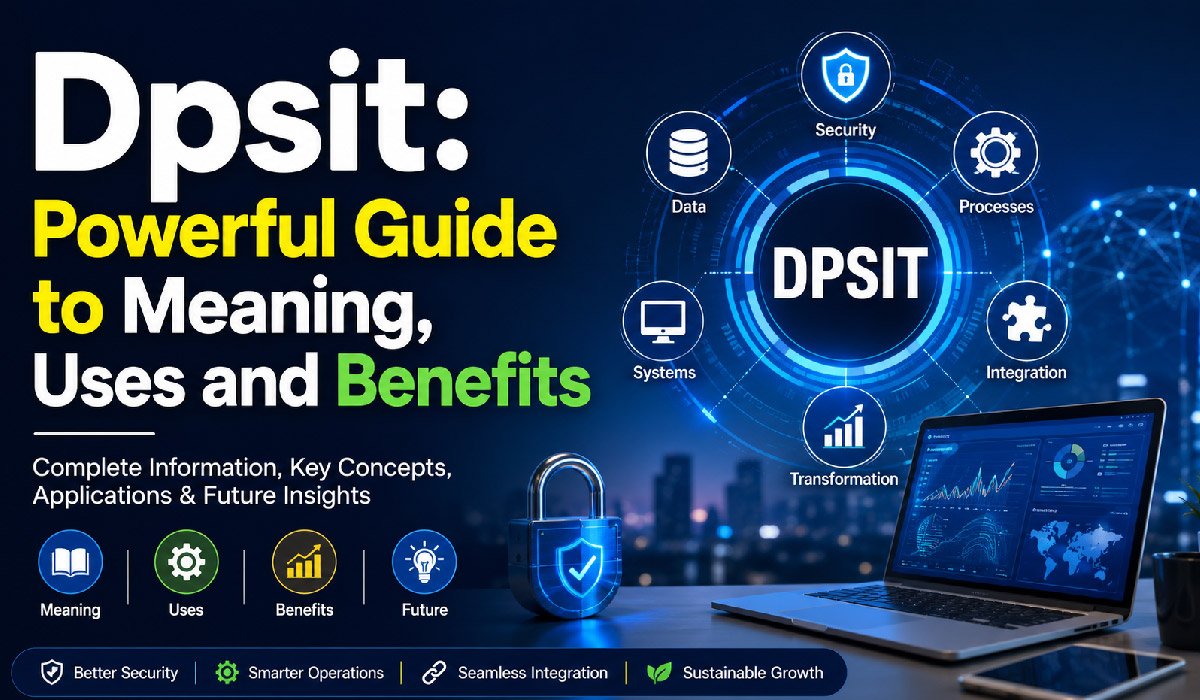
Dpsit is a term used online in discussions about digital systems, information management, security, and business transformation. It does not have one universally accepted definition, so its meaning can change depending on the context. In general, the term is connected with organizing data, improving processes, integrating technology, and building safer digital operations.
Several interpretations are associated with Dpsit. These include Digital Payment Security and Information Technology, Digital Progress and Strategic Innovation Transformation, and Data, Processes, Systems, Integration, and Transformation. Each interpretation focuses on a different part of the digital environment.
Understanding Dpsit therefore requires more than learning a single full form. This guide explains its meaning, major interpretations, working principles, core elements, security role, business applications, benefits, challenges, implementation, career opportunities, and possible future direction.
What Is Dpsit?
Dpsit can be understood as a structured approach to managing different parts of a modern digital environment. It brings attention to areas such as data, business processes, technology systems, integration, security, and organizational change. The goal is to make digital operations more organized, reliable, secure, and suitable for future growth.
The exact meaning of Dpsit depends on where the term appears. A financial organization may connect it with payment security and information technology. A business consultant may use it when discussing digital progress and innovation. An IT team may understand it through data, processes, systems, integration, and transformation.
These interpretations are different, but they share a common idea. Technology works better when information, people, processes, security, and systems are managed together. Dpsit can therefore serve as a useful way to understand coordinated digital improvement.
Dpsit Meaning and Full Form
There is no single globally standardized Dpsit full form. Instead, different interpretations are associated with the letters. One is Digital Payment Security and Information Technology, which focuses on protecting electronic payments, financial information, networks, and transaction systems from fraud, unauthorized access, and other security risks.
Another interpretation is Digital Progress and Strategic Innovation Transformation. This meaning is more closely connected with business development. It describes how organizations can introduce technology, improve existing operations, support innovation, and make digital change part of their long-term strategy.
A third interpretation is Data, Processes, Systems, Integration, and Transformation. This version provides a useful model for enterprise technology management. Data supplies information, processes organize work, systems provide technical support, integration connects platforms, and transformation helps an organization adapt. The intended Dpsit meaning should always be understood from its surrounding context.
How Dpsit Works
Dpsit works by treating digital operations as connected parts rather than separate activities. An organization first needs reliable data and clear processes. It then needs systems capable of handling those processes efficiently. When different applications and databases are connected, information can move more easily between departments and business functions.
Security is also important throughout this environment. Access controls, authentication, encryption, monitoring, and risk management can help protect information and technology resources. Organizations can then examine performance data to discover delays, security weaknesses, unnecessary manual work, or systems that no longer meet business requirements.
Improvement becomes an ongoing process rather than a single technology project. A company may automate one workflow, integrate two platforms, move selected services to the cloud, or strengthen transaction security. Results can then be measured before further changes are introduced, creating a more controlled approach to digital transformation.
Core Elements of Dpsit
Data is one of the most important elements associated with Dpsit because digital decisions depend on reliable information. Organizations need methods for collecting, storing, organizing, protecting, and analyzing their data. Poor-quality or duplicated information can create inaccurate reports and weak decisions, while good data management supports clearer planning.
Processes and systems form another important layer. Processes define how work moves from one stage to another, while systems provide the software and infrastructure needed to complete that work. Automation can remove repetitive tasks, but it works best when the underlying process has already been designed properly.
Integration and transformation complete the broader model. Integration allows applications, databases, and departments to exchange information. Transformation uses these connected capabilities to improve how the organization operates. Together, these elements show why Dpsit is better understood as a coordinated digital concept rather than a single software product.
Dpsit and Digital Payment Security
One interpretation of Dpsit places strong emphasis on digital payment security and information technology. Online banking, payment gateways, mobile wallets, e-commerce systems, and other financial services handle valuable information. These systems require multiple security controls because criminals may attempt to steal credentials, intercept data, or perform unauthorized transactions.
Encryption can protect information while it is stored or transmitted. Authentication helps confirm that a person requesting access is really the authorized user. Tokenization can reduce exposure of sensitive payment details, while transaction monitoring can identify unusual behavior that may require further investigation.
Payment security is not based on one technology alone. Secure software, access management, network protection, monitoring, employee practices, and regulatory requirements all contribute to the wider security environment. In this context, Dpsit represents a structured way of thinking about payment technology and the controls required to maintain digital trust.
Dpsit in Business and Digital Transformation
Businesses increasingly depend on digital platforms for communication, sales, customer management, finance, supply chains, reporting, and daily operations. Dpsit can help explain how these technologies should work together. Instead of purchasing new software without a wider plan, an organization can connect technology decisions with specific operational and strategic goals.
Digital transformation may include replacing outdated systems, automating manual processes, introducing cloud services, improving analytics, or connecting information between departments. Successful transformation also involves employees and business procedures. A technically advanced system provides limited value when workers cannot use it effectively or when existing processes remain inefficient.
For this reason, Dpsit can be viewed as a combination of technology and organizational improvement. Businesses can identify a problem, select appropriate technology, integrate it with existing operations, train employees, measure results, and make further improvements. This approach makes digital change more practical and manageable.
Role of Data Management in Dpsit
Data supports almost every modern digital activity, making data management an important part of Dpsit. Businesses collect information from customers, transactions, websites, applications, employees, equipment, and internal systems. This information becomes useful only when it is accurate, accessible, protected, and organized in a way that supports its intended purpose.
Data governance establishes rules for how information is collected, stored, accessed, changed, retained, and protected. Clear responsibilities can reduce duplication and prevent different departments from working with conflicting versions of the same information. Privacy and security requirements also need to be considered throughout the data lifecycle.
Well-managed data supports reporting, forecasting, automation, analytics, and better operational decisions. Organizations can identify trends and understand performance more clearly when their information is reliable. In a Dpsit-oriented environment, data is therefore treated as a managed resource rather than simply something stored inside databases.
System Integration and Digital Infrastructure
Organizations often use many applications at the same time. Finance teams may use accounting software, sales departments may rely on customer relationship management systems, and other teams may use separate platforms for inventory, communication, support, or project management. Problems develop when these systems cannot exchange useful information efficiently.
System integration connects these separate technologies. Application programming interfaces, shared databases, integration platforms, and other methods can allow information to move between systems with less manual handling. This can reduce repeated data entry, improve reporting, and give different departments access to more consistent information.
Digital infrastructure provides the technical foundation underneath these connections. Servers, cloud services, networks, databases, identity systems, and security controls all contribute to reliable operations. Infrastructure should also be planned for changing demand. When integration and infrastructure are designed carefully, organizations can expand services without rebuilding every part of their technology environment.
Applications of Dpsit Across Industries
Dpsit-related principles can be applied across many industries because most organizations now depend on data and connected technology. Banks and fintech companies use secure transaction systems, fraud monitoring, identity controls, and digital payment infrastructure. E-commerce companies similarly depend on connected payment, inventory, customer, order, and delivery systems.
Educational institutions can use integrated platforms for admissions, student records, learning systems, payments, scheduling, and communication. Healthcare organizations depend on secure information systems for administrative operations and sensitive records. Government agencies also use digital platforms to manage information and provide online public services.
Technology companies apply similar ideas through cloud infrastructure, software development, cybersecurity, analytics, and automated deployment processes. The exact tools vary between industries, but the underlying needs are similar. Organizations want accurate information, efficient processes, reliable systems, secure access, and effective integration. These shared needs explain why Dpsit-related concepts can apply to different digital environments.
Benefits of Using a Dpsit Approach
A structured Dpsit approach can improve efficiency by connecting data, processes, and technology around clear objectives. Employees may spend less time transferring information manually between applications, searching for records, or repeating administrative tasks. Automation and integration can also make routine operations faster and more consistent when they are implemented carefully.
Better data management can improve reporting and decision-making. Security measures can reduce exposure to unauthorized access, fraud, and information loss. Scalable systems may also make it easier for organizations to support additional customers, employees, transactions, or services without repeatedly replacing their entire technology infrastructure.
Another benefit is improved visibility. When systems and information are connected, managers can understand operational performance more clearly and identify problems sooner. However, these benefits depend on proper implementation. Technology alone does not guarantee better results. Organizations still need clear goals, suitable processes, trained employees, reliable data, security controls, and regular performance reviews.
Challenges and Risks of Dpsit
Implementing connected digital systems can create several challenges. Cost is often one of the first concerns because organizations may need new software, infrastructure, security tools, integration services, and employee training. Older systems can create additional difficulties when they were not designed to communicate with modern applications or cloud platforms.
Cybersecurity is another major concern. Connecting more systems can increase the number of accounts, devices, applications, and interfaces that require protection. Poor configuration, weak passwords, excessive permissions, outdated software, and inadequate monitoring can create security weaknesses. Data privacy and regulatory requirements may also increase implementation complexity.
People and organizational culture can present challenges as well. Employees may resist unfamiliar workflows, particularly when changes are introduced without enough explanation or training. Organizations can reduce these difficulties through phased implementation, careful testing, realistic budgets, employee involvement, security reviews, and clear responsibility for each part of the transformation.
How Organizations Can Implement Dpsit
A practical implementation should begin with an assessment of existing operations. Organizations need to understand what systems they already use, where important data is stored, which processes cause delays, and what security weaknesses require attention. Clear business objectives should be established before major technology investments are made.
The next stage involves improving processes and choosing suitable solutions. This may include cleaning data, automating selected tasks, replacing outdated software, integrating important platforms, improving access controls, or adopting appropriate cloud services. Changes can be introduced gradually so that problems are identified before they affect the entire organization.
Training and measurement are equally important. Employees should understand new tools, security responsibilities, and workflow changes. Organizations can then monitor performance through suitable measures such as processing time, system reliability, error rates, security events, or customer experience. Regular evaluation helps determine whether the transformation is delivering useful results.
Dpsit Skills and Career Opportunities
The areas connected with Dpsit overlap with several technology careers. Cybersecurity analysts examine threats and security controls, while information security managers develop broader protection strategies. Digital transformation consultants help organizations improve processes and adopt technology. Data governance professionals focus on information quality, ownership, access, and compliance.
Other relevant roles may include cloud specialists, systems architects, integration engineers, risk professionals, IT governance specialists, and fintech security experts. The exact knowledge required depends on the role. Useful technical skills can include networking, databases, cloud computing, cybersecurity, system integration, APIs, analytics, automation, and identity management.
Business skills are also valuable because digital transformation involves more than technical work. Professionals may need to understand risk, compliance, project planning, communication, and organizational processes. Someone working across these areas should be able to connect technology decisions with practical business requirements instead of focusing only on individual software tools.
Dpsit Compared With Traditional IT Management
Traditional IT management often focuses on maintaining hardware, software, networks, user accounts, and technical support. These responsibilities remain essential, but modern digital operations frequently require closer coordination between technology and business strategy. A Dpsit-style approach places greater emphasis on integration, data governance, security, process improvement, and continuous transformation.
The difference is therefore mainly about scope. Traditional IT may concentrate on keeping individual systems reliable and available. A broader digital framework also asks whether those systems share information effectively, support efficient workflows, protect data appropriately, and contribute to wider organizational objectives.
The two approaches should not be treated as complete opposites. Strong traditional IT management provides much of the technical foundation required for successful digital transformation. Dpsit can be understood as extending that foundation by connecting infrastructure management with data, processes, integration, security, innovation, and strategic change across the organization.
Future of Dpsit
The areas associated with Dpsit are likely to continue changing as digital technology develops. Artificial intelligence and machine learning can support fraud detection, analytics, automation, and operational monitoring. Cloud-native technologies can provide flexible infrastructure, while stronger identity controls and zero-trust security approaches can help organizations manage access across complex digital environments.
Automation is also becoming more advanced. Organizations can use intelligent systems to process routine information, identify unusual activity, and support employees with repetitive tasks. Better interoperability may make it easier for different platforms to exchange data, although security, privacy, governance, and reliability will remain important concerns.
These developments do not mean every organization should immediately adopt every new technology. Future digital success will depend on choosing tools that solve real problems and can be managed responsibly. The central Dpsit idea remains relevant: data, systems, processes, security, integration, and transformation need to develop together.
Final Thoughts
Dpsit is best understood as a flexible digital concept rather than a single officially standardized framework. Depending on context, it may refer to Digital Payment Security and Information Technology, Digital Progress and Strategic Innovation Transformation, or Data, Processes, Systems, Integration, and Transformation. Readers should therefore examine the surrounding context before deciding which meaning applies.
Despite these different interpretations, the main ideas are closely connected. Modern organizations need reliable data, efficient processes, secure technology, connected systems, and a practical approach to continuous improvement. Managing these areas together can support better digital operations and reduce unnecessary fragmentation.
As businesses and institutions become more dependent on technology, these principles become increasingly important. Understanding Dpsit can help readers see how security, information management, integration, infrastructure, and transformation fit together within a broader digital environment.
FAQs
What is Dpsit and what does it mean?
Dpsit is a flexible digital concept linked with data management, system integration, security, business processes, and digital transformation. Its exact meaning can vary depending on the technology, business, or payment-security context.
What is the full form of Dpsit?
Dpsit can have different full forms, including Digital Payment Security and Information Technology and Data, Processes, Systems, Integration, and Transformation. The correct interpretation usually depends on where and how the term is used.
How does Dpsit help businesses?
Dpsit can help businesses organize data, improve workflows, connect different systems, strengthen digital security, and support technology upgrades. These improvements can make everyday operations more efficient and easier to manage.
Is Dpsit related to cybersecurity?
Yes. In digital payment and information technology contexts, Dpsit can include cybersecurity practices such as encryption, authentication, fraud monitoring, access management, and data protection to create safer digital systems.
What is the future of Dpsit?
Dpsit-related practices may develop alongside artificial intelligence, cloud computing, automation, predictive analytics, and stronger cybersecurity methods. These technologies can help organizations create more connected, secure, and efficient digital operations
Latest News And Amazing News. Visit: Insider Zine