

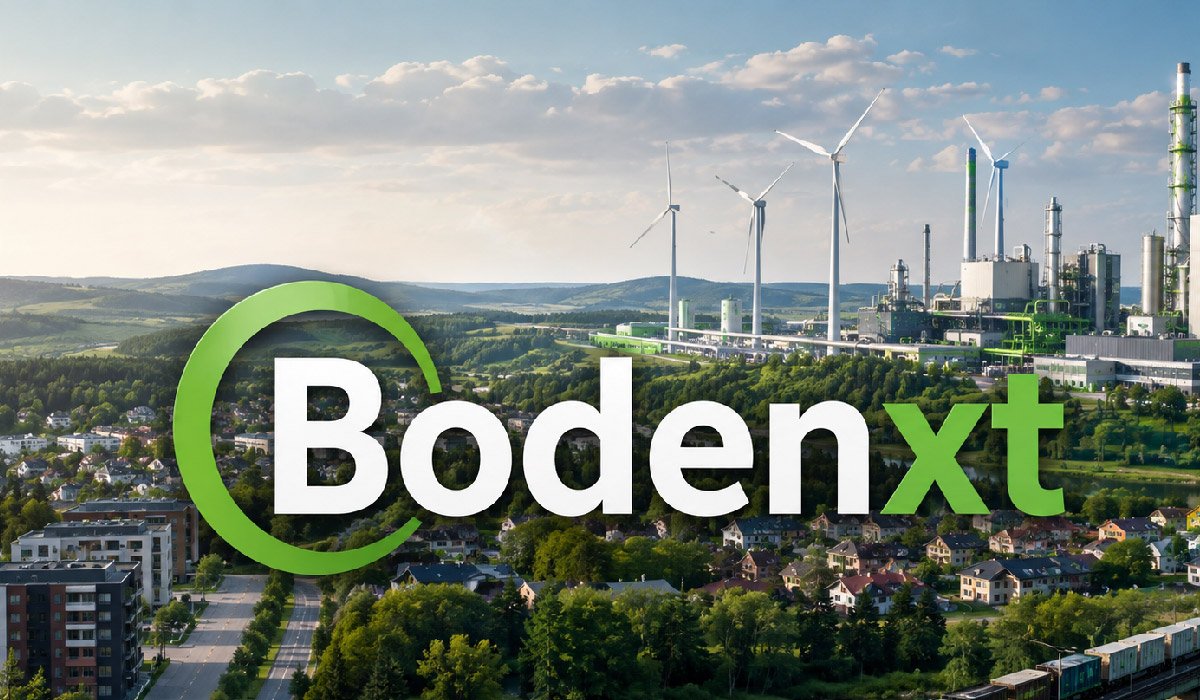
Bodenxt is a development platform connected with the rapid transformation of Boden in northern Sweden. The town is moving from steady growth toward a new period shaped by green industry, investment, jobs, housing, and modern infrastructure.
The term has gained attention because Boden is becoming an important location for cleaner industrial development. Large projects, especially Stegra’s green steel development, are creating demand for workers, homes, transport, education, utilities, and stronger local businesses.
This guide explains Bodenxt in simple words and looks at why it matters. It covers its purpose, connection with Stegra, green steel, jobs, housing, skills, businesses, infrastructure, current progress, major challenges, and Boden’s future development.
What Is Bodenxt?
Bodenxt is a development platform used by Boden Municipality to support and coordinate the town’s rapid transformation. It brings different areas of community growth together instead of treating industrial expansion, housing, infrastructure, and public services as separate issues.
Boden is experiencing changes that would normally take many years. New industrial investment means more workers and families may need housing, schools, roads, shops, transport, water, electricity, and other everyday services within a much shorter period.
Bodenxt helps connect these needs within a wider development approach. Its work covers skills, housing, businesses, above-ground infrastructure, and essential systems below ground, helping Boden prepare for industrial growth while remaining a practical place to live and work.
Why Bodenxt Has Become Important
Boden was traditionally known for its military history and relatively steady way of life. Green industrial investment has changed the town’s direction, bringing larger projects and creating opportunities that reach far beyond the industrial sites themselves.
Stegra’s green steel development is central to this transformation. A project of this size needs construction workers, engineers, technicians, suppliers, transport services, housing, and many other resources, placing new demands on the surrounding community.
Bodenxt is important because these needs are closely connected. Increasing employment without expanding housing can create shortages, while building new neighborhoods without suitable roads, water, power, schools, and services can create another set of problems.
Why Boden Needs a Wider Growth Plan
Large industrial investments can change a smaller town very quickly. Thousands of direct and indirect jobs can attract people from other parts of Sweden and abroad, increasing demand for almost every service residents use each day.
Housing is one clear example. Workers may initially arrive alone, but permanent jobs can encourage partners and children to move too. This means population growth can increase demand for apartments, family homes, schools, healthcare, transport, and leisure facilities.
Bodenxt approaches this transformation as one connected process. Rather than concentrating only on industrial construction, the wider goal is to help the community develop at a pace that supports new residents, existing residents, employers, and local services.
Bodenxt and Stegra Explained
Bodenxt and Stegra are closely connected with Boden’s current transformation, but they have different roles. Stegra, previously known as H2 Green Steel, is the private company developing a major green steel production facility in Boden Industrial Park.
Bodenxt has a broader community role. It is connected with Boden Municipality’s transformation work and deals with needs created around industrial development, including housing, skills, businesses, transportation, utilities, and other important parts of town growth.
The difference can be understood simply. Stegra develops and operates its industrial project, while Boden must prepare the surrounding community for the effects of that investment. Bodenxt helps bring those wider development needs into a coordinated framework.
Green Steel and Boden’s Transformation
Steel is essential for buildings, vehicles, bridges, tools, and industrial machinery. Traditional steel production can produce large amounts of carbon dioxide because coal is commonly used during important stages of the manufacturing process.
Stegra’s Boden development plans to use hydrogen produced with fossil-free electricity. This production approach is designed to reduce carbon dioxide emissions significantly compared with a common coal-based blast furnace process, making the project an important part of cleaner industrial development.
The planned development includes more than 700 megawatts of electrolysis capacity and annual green hydrogen production exceeding 100,000 tonnes. A project of this scale needs substantial power, transportation, workers, suppliers, housing, and services, directly increasing the importance of Bodenxt.
The Five Key Areas of Bodenxt
Bodenxt can be understood through five important areas: skills supply, living and housing, business development, infrastructure above ground, and infrastructure below ground. Together, these areas cover many of the practical needs created by rapid population and industrial growth.
Skills supply focuses on finding and training workers. Living and housing deals with creating suitable places for people to build permanent lives, while business development helps existing and new companies benefit from the economic activity generated around major industrial investments.
Infrastructure completes the picture. Above-ground development includes roads, railways, and physical connections, while below-ground systems include water, wastewater, drainage, electricity connections, and fiber. All five areas must develop together for long-term growth to work effectively.
New Jobs and Skills in Boden
Employment is one of the biggest opportunities linked with Boden’s transformation. Plans have pointed toward around 10,000 direct and indirect jobs across the wider region, while approximately 2,000 jobs have been associated with Stegra’s industrial development.
These opportunities extend beyond steel production. Construction workers, technicians, engineers, drivers, electricians, teachers, healthcare employees, retail workers, service staff, and many other professionals can become increasingly important as industry and population grow together.
Education therefore plays an important role in Bodenxt. The Upper Secondary Engineering Programme at Björknäsgymnasiet, planned to begin in autumn 2026, is one example of connecting education with changing employment needs and helping younger residents prepare for new technical careers.
Housing and Population Growth
Housing is one of the most important challenges connected with Bodenxt. Industrial jobs can attract workers, but permanent population growth becomes harder when those workers cannot find suitable apartments or houses for themselves and their families.
Boden finished 2025 with 28,624 registered residents. Development plans have also enabled around 1,300 apartments, showing that housing is being treated as an important part of preparing the municipality for further population growth.
Temporary workers make the situation more complex. Some people connected with construction projects can live around Boden without becoming part of the registered population. This means the real demand for accommodation and everyday services can sometimes be greater than population figures alone suggest.
How Bodenxt Affects Everyday Life
Industrial transformation is not only about factories and employment figures. New residents need supermarkets, healthcare, schools, childcare, transportation, recreation, restaurants, and other services that allow people to build comfortable everyday lives.
Families are particularly important for long-term population growth. A worker may accept a temporary position without moving an entire household, but permanent settlement becomes more likely when good housing, education, transport, and community services are available.
This gives Bodenxt a wider purpose than supporting industry alone. Successful development means creating a town where existing and new residents can live well, while public services and local facilities grow alongside employment and population.
Local Businesses and New Opportunities
Major industrial projects can create opportunities for businesses far beyond the company operating the factory. More workers and residents mean increased demand for food, accommodation, transportation, repairs, retail, construction, cleaning, and professional services.
Companies can also become suppliers to the industrial sector. Builders, electricians, logistics businesses, maintenance companies, equipment providers, and technical specialists may find new opportunities as industrial activity increases around Boden.
A diverse local economy is important for long-term stability. Boden’s future cannot depend entirely on one industrial employer. Supporting different businesses can spread economic benefits across the community while creating additional jobs that are not directly tied to steel production.
Roads and Rail Development
Transport infrastructure is essential when a town becomes home to major industrial activity. Employees must travel between homes and workplaces, while businesses need reliable ways to move equipment, materials, finished products, and other goods.
One important development is the railway connection serving Boden Industrial Park. The railway is approximately six kilometers long, includes nine bridges, and can accommodate trains measuring up to 1,000 meters in length.
The connection links the industrial area with Sweden’s wider railway system. Infrastructure like this can support industrial operations while strengthening Boden’s position as a location where large projects have access to important national transportation networks.
Infrastructure Below the Ground
Some of Bodenxt’s most important work is less visible. Every new home, school, workplace, and industrial building depends on basic systems such as water supply, wastewater management, drainage, electricity connections, and digital infrastructure.
Rapid development can place heavy pressure on these systems. Hundreds of new homes cannot function properly without enough water and electricity, while growing neighborhoods also need reliable wastewater and drainage networks.
Planning underground infrastructure early can prevent growth from creating larger problems later. Bodenxt therefore treats these basic systems as part of the transformation rather than something that can simply be added after new neighborhoods and workplaces have already been built.
Education and Future Workers
Boden needs both experienced workers and a new generation with skills suited to modern industry. Education can help local young people benefit directly from the employment opportunities appearing around their hometown.
The engineering programme planned at Björknäsgymnasiet for autumn 2026 is an example of this approach. Technical education can introduce students to skills connected with engineering, production, technology, and other fields needed by modern employers.
Closer relationships between schools and businesses can also make career paths easier to understand. Students can see which skills employers need, while companies can develop stronger connections with potential future workers living in the surrounding region.
Progress Under Bodenxt
By 2026, Boden’s transformation has moved beyond early planning. New infrastructure is visible, industrial construction has brought workers into the area, housing development is moving forward, and education is adapting to changing employment needs.
Population figures provide another sign of change. Boden ended 2025 with 28,624 registered residents and finished above its population forecast, while workers and families connected with major projects have added further activity around the municipality.
Projects such as the Boden Sustainability Center also reflect the wider approach to transformation. Cooperation between businesses, education, the municipality, and other groups can help ensure that industrial development contributes to knowledge, skills, innovation, and longer-term community growth.
Challenges Bodenxt Must Manage
Housing remains one of Boden’s biggest challenges. Rental availability has been limited during this period of rapid development, making it harder for some workers to move permanently even when suitable employment opportunities exist.
Skills are another challenge. Industry needs engineers, technicians, builders, and specialists, while a growing community simultaneously needs teachers, healthcare workers, drivers, retail employees, and public-service staff. Competition for workers can therefore affect many sectors.
Growth also costs money. Roads, utilities, schools, public facilities, and housing areas require major investment. Boden must balance immediate development needs with long-term financial sustainability so today’s expansion does not create unnecessary pressure in future years.
Why Economic Diversity Matters
Stegra is a major force behind Boden’s current industrial transformation. However, depending too heavily on a single company or industry can create risks because large industrial projects may experience construction delays, changing costs, financing pressures, or market changes.
Boden therefore benefits when industrial investment attracts a wider group of businesses. Suppliers, technology companies, logistics providers, service businesses, construction firms, and other employers can create a more varied local economy.
Economic diversity can also provide greater stability after the largest construction phase ends. Temporary construction employment may decline, but a broader business community can continue providing jobs, investment, services, and opportunities for residents over the longer term.
Bodenxt and Boden’s Future
The period leading toward 2030 will be important for Boden. More housing, infrastructure, workers, businesses, and community services will be required if planned industrial development and population growth continue.
Stegra will remain an important part of this process, but Bodenxt represents the wider transformation surrounding such investments. The larger aim is to turn industrial expansion into lasting economic and community development rather than a short period of construction activity.
The strongest sign of success will be people choosing to stay. Workers who settle permanently, families who build lives in Boden, young people who find local careers, and businesses that continue investing can turn today’s rapid development into lasting growth.
Why Bodenxt Matters Beyond Boden
Boden’s experience offers an interesting example for other smaller communities facing major industrial investment. Building a factory is only one part of managing a project capable of bringing thousands of workers and major economic activity into an area.
Housing must expand alongside employment. Transport and utilities must support new development, while schools and training programmes need to prepare workers. Local businesses also need opportunities to participate in the changing economy.
Bodenxt shows the value of viewing these needs as connected. Other towns experiencing rapid industrial growth can face similar challenges, making Boden’s approach useful for understanding how large investments can reshape an entire community.
Final Thoughts
Bodenxt is Boden Municipality’s wider approach to managing a period of unusually fast transformation. It connects industrial growth with housing, skills, local businesses, transportation, utilities, education, and the everyday needs of the community.
Stegra’s green steel project is an important force behind the current change, but Bodenxt looks beyond the factory itself. Its purpose is to help ensure that the town around new industry has the homes, workers, infrastructure, and services required to function.
The coming years will show how successfully Boden manages this growth. If industrial investment creates permanent jobs, stronger businesses, good housing, reliable services, and lasting population growth, Bodenxt could become an important part of Boden’s long-term development story.
FAQs
What is Bodenxt?
Bodenxt is a development platform connected with Boden Municipality’s rapid transformation. It brings together housing, skills, business development, transport, utilities, and other community needs created by major industrial growth in Boden.
Is Bodenxt the same as Stegra?
No. Stegra is the company developing a major green steel project in Boden. Bodenxt has a wider focus on the municipality’s transformation, including housing, workers, infrastructure, businesses, education, and community development.
Why is Bodenxt important?
Bodenxt is important because rapid industrial growth affects much more than employment. New workers also need housing, roads, water, schools, transport, shops, and services, so these different needs must develop together.
How does Bodenxt create job opportunities?
Boden’s transformation creates demand in industry, construction, engineering, transport, education, healthcare, retail, maintenance, and local services. New businesses and industrial suppliers can also create additional employment as economic activity increases.
What is the future of Bodenxt?
Bodenxt’s future is closely connected with Boden’s continued transformation toward 2030 and beyond. Its success will depend on turning industrial investment into permanent employment, sustainable housing, stronger infrastructure, successful businesses, and lasting population growth.
Latest News And Amazing News. Visit: Insider Zine