

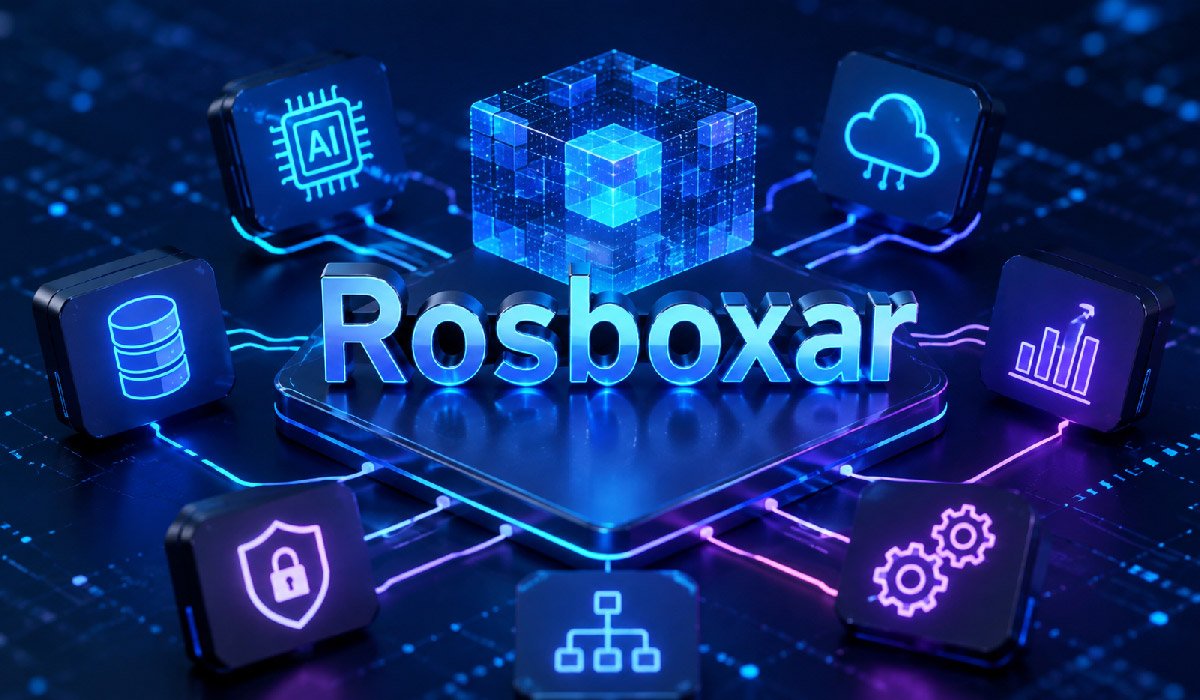
Rosboxar is an emerging technology term attracting attention from people interested in artificial intelligence, automation, and flexible digital systems. Its unusual name also makes readers curious about what Rosboxar actually means today.
The term has become popular because it is connected with modular technology, smart automation, and adaptable digital tools. These ideas matter to businesses and creators looking for systems that change with them.
This guide explores Rosboxar in simple detail, including its meaning, working model, technology, features, AI connection, business uses, creative applications, benefits, challenges, and future possibilities in the changing digital world.
What Is Rosboxar?
Rosboxar describes a flexible digital concept that combines modular systems with intelligent technology. Instead of depending on one large fixed setup, the system is built around separate components that can perform different jobs.
Think of these components like building blocks. A user can begin with the tools needed today and add other parts later. Existing parts do not necessarily need to be replaced whenever requirements change.
AI and automation add another layer to this approach. Smart components can assist with data, repetitive processes, suggestions, and workflows. The wider purpose is to create technology that can adapt around different users and tasks.
Why Is Rosboxar Becoming Popular?
One reason for growing interest in Rosboxar is the changing way people use technology. Businesses no longer want every digital system to remain fixed for years. They need tools that can grow as their requirements change.
AI has also made flexible technology more attractive. Companies, developers, and creative professionals are looking for practical ways to automate routine work without rebuilding their entire digital environment. Modular systems provide an interesting answer to this problem.
The unusual name also creates search interest. People who discover Rosboxar naturally want to understand whether it is software, an AI platform, a technology model, or something else. Its connection with several modern technology trends increases that curiosity.
What You Will Learn About Rosboxar
Understanding Rosboxar requires looking beyond a short definition. The concept brings together several areas of modern technology, including artificial intelligence, automation, modular architecture, software integration, APIs, and cloud-based digital services.
This guide explains how these different pieces can work together. It also explores how a modular approach may help businesses, developers, designers, educators, healthcare teams, manufacturers, marketers, and other professionals build more adaptable workflows.
You will also learn about possible benefits, security considerations, implementation challenges, sustainability, and future development. Together, these areas provide a much clearer picture of why the Rosboxar concept has attracted online interest.
What Does the Name Rosboxar Mean?
The word Rosboxar does not have the familiar meaning of common technology terms such as software, cloud, or artificial intelligence. Its unusual spelling is part of what makes the term stand out in online searches.
The name has been associated with two broad ideas. “Ros” can suggest robotic or automated systems, while “boxar” can be understood as separate boxes or components. This interpretation fits closely with its modular technology concept.
Under this explanation, Rosboxar represents intelligent digital building blocks. Each block can provide a particular function while remaining part of a larger system. The name therefore reflects the broader idea of combining automation with flexible components.
The Main Idea Behind Rosboxar
Traditional software can sometimes give users a large package of features even when they only need a small number of them. Rosboxar takes a different approach by placing modularity at the center of the system.
A company could begin with several essential components rather than adopting everything at once. When new requirements appear, additional modules could be introduced. This makes the digital environment capable of changing alongside the organization.
The approach can also give users greater control. Instead of shaping every workflow around one fixed system, organizations can select components that better match their existing processes. This flexibility is one of Rosboxar’s most important ideas.
How Does Rosboxar Work?
Imagine a business using separate tools for customer information, project management, analytics, and repetitive office tasks. A modular environment can connect useful functions while allowing individual components to handle specific responsibilities.
Each module can focus on one area. One component might process data, another could provide automation, while another could connect external software. Together, the modules create a larger digital environment without behaving like one tightly connected program.
This structure also makes expansion easier. When a business needs another capability, it can add a suitable component instead of replacing its complete setup. The same principle can make individual services easier to update as technology develops.
The Role of Artificial Intelligence
Artificial intelligence gives the Rosboxar concept much of its smart functionality. AI systems can examine information, identify patterns, make useful suggestions, and assist with repetitive jobs that would otherwise require regular human attention.
For example, an intelligent module could study common workflow actions and help automate predictable steps. Another could organize large amounts of information. The exact function would depend on the module and the purpose for which it was designed.
Human control remains important in this model. AI is most useful when it supports people rather than automatically controlling every decision. Creative judgment, important business choices, and sensitive decisions can still require direct human involvement.
Machine Learning and Smart Automation
Machine learning is closely connected with modern AI. It allows computer systems to find patterns within data and improve certain outputs as they process relevant information. This can make digital tools more responsive to repeated activities.
Within a modular environment, machine learning could support individual components. A business analytics module might recognize patterns in records, while an automation component could identify repetitive processes that are suitable for faster handling.
Smart automation can therefore reduce manual steps in suitable workflows. Employees may spend less time repeating simple actions and more time on planning, problem-solving, communication, and other tasks where human understanding provides greater value.
Modular Architecture Explained Simply
Modular architecture means dividing a system into smaller parts instead of creating everything as one huge unit. Each component is designed for a particular purpose while still being able to work with other parts.
A simple comparison is a set of building blocks. You can remove one block, replace another, or add several more without rebuilding everything from the beginning. Digital modules follow a similar basic principle.
For Rosboxar, this approach is central to flexibility. Organizations with different needs could create different combinations of components. A small creative agency and a manufacturing company would therefore not need to use exactly the same digital setup.
Microservices and Rosboxar
Microservices provide another way of understanding modular technology. In a microservices architecture, a large application can be divided into smaller services. Each service focuses on a specific function and communicates with other parts when required.
This can make development more manageable. Teams may update one service without making major changes throughout an entire application. Problems can also be easier to isolate when different functions have clearer boundaries.
Rosboxar’s modular concept follows similar thinking. Smaller independent functions can create a flexible overall environment. As requirements develop, individual services or modules may be improved, expanded, connected, or replaced more easily.
APIs and Software Integration
Most businesses already depend on several software products. Starting completely from zero whenever a new platform is introduced would be expensive and inconvenient. This is why integration plays an important role in flexible technology.
APIs, or application programming interfaces, allow different software systems to exchange information and perform connected actions. They can act like bridges between applications that were originally created for different purposes.
For a Rosboxar-style environment, APIs could connect existing business tools with new modules. Customer management, analytics, project tools, communication platforms, and other applications could become parts of a more connected workflow.
Cloud Technology and Accessibility
Cloud technology allows applications, computing resources, and information to be accessed through internet-based infrastructure. It has become an important part of modern business because teams increasingly work across different devices and locations.
A cloud-based modular environment could allow organizations to add services without installing every component on individual computers. Updates and expansion may also become easier when digital resources are managed through scalable online infrastructure.
Cloud technology does not remove the need for careful management. Businesses still need appropriate access controls, reliable providers, backups, and strong data protection. Flexibility works best when it is combined with responsible technical practices.
Main Features of Rosboxar
Modularity is the feature most closely connected with Rosboxar. Users can work with separate components rather than depending entirely on one fixed package. This provides greater freedom when building a digital environment around particular requirements.
Automation and intelligent assistance are also central features. AI-supported tools can help process information, recognize patterns, simplify routine actions, and support everyday workflows. Integration can help these components communicate with existing software.
Scalability completes the basic model. A small organization may begin with a simple configuration and expand it later. This reduces the pressure to predict every future technology requirement before the organization has actually reached that stage.
Rosboxar for Artists and Designers
Creative professionals perform more repetitive digital work than people sometimes realize. Resizing files, preparing different formats, organizing assets, and repeating basic production steps can take valuable time away from the creative process.
Rosboxar-style automation could handle selected routine processes while allowing artists to remain responsible for creative direction. AI tools could also help explore ideas, organize information, compare options, or speed up early stages of production.
Modularity is especially useful because creative workflows vary widely. A photographer, graphic designer, animator, and digital illustrator may require completely different tools. Each could create a setup around the functions that support their own work.
Rosboxar for Software Developers
Software development involves many connected stages. Teams may plan features, write code, test applications, find errors, manage versions, monitor performance, and prepare updates. Different tools are commonly used throughout this process.
A modular environment could bring selected development functions into a more organized workflow. Teams might choose components for testing, monitoring, automation, project management, data analysis, or integration with their existing development tools.
This approach can also suit growing projects. A small development team may initially require only basic functions. More specialized components can be introduced as the software, user base, and technical requirements become larger.
Rosboxar for Businesses
Businesses often build their digital operations gradually. They may have separate software for customers, sales, finance, communication, marketing, analytics, and project management. Over time, moving information between these systems can become complicated.
Rosboxar offers a useful conceptual approach to this problem. Modular components and integrations can connect selected functions without requiring every organization to adopt exactly the same collection of tools or workflows.
Automation could also reduce repetitive administrative work. Tasks such as organizing information, processing routine data, preparing standard updates, or moving information between connected services may become easier when properly designed automated workflows are introduced.
Rosboxar in Manufacturing
Modern manufacturing increasingly depends on digital information. Factories use sensors, software, automated equipment, production records, and monitoring systems to understand what is happening across different parts of their operations.
A modular system could allow manufacturers to choose components for equipment monitoring, production data, maintenance planning, quality checks, or resource management. New functions could be introduced when production requirements change.
AI could add another useful layer by finding patterns within operational information. Human specialists would still be important for interpreting complex situations and making major decisions, while digital tools could support faster access to useful information.
Rosboxar in Healthcare
Healthcare organizations manage large amounts of information while dealing with highly sensitive work. Modular technology could support administrative areas such as scheduling, workflow organization, records management, resource planning, and selected data analysis.
Different departments can have different requirements. A modular structure may allow an organization to use specialized components rather than forcing every department into an identical workflow. Integration can also help reduce unnecessary movement between disconnected systems.
Healthcare requires particularly strong safeguards. Privacy, security, accuracy, professional oversight, and appropriate access to patient information are essential. AI can support certain processes, but important medical decisions require qualified healthcare professionals and reliable clinical systems.
Rosboxar in Education
Schools, universities, teachers, and students now use many digital tools. These may include learning platforms, assignment systems, communication services, online resources, assessment tools, and applications for organizing educational information.
A modular approach could allow institutions to choose tools based on their particular teaching needs. One school may focus on lesson organization, while another may require stronger analytics, communication, or administrative functions.
AI could also assist with routine educational work, content organization, and personalized learning support. Teachers would remain important because education involves motivation, judgment, communication, and understanding students in ways that technology alone cannot fully replace.
Rosboxar in Marketing
Marketing teams work with customer information, campaigns, content, analytics, social platforms, advertising tools, and performance reports. Managing these areas across disconnected systems can create unnecessary repetitive work.
Modular technology could connect selected marketing functions. A team might combine analytics with customer management, automation, reporting, or content workflow tools. It could then expand its setup when new marketing channels become important.
AI can help identify patterns within large datasets and assist with routine analysis. Marketers can use those insights alongside their own knowledge of customers, brand identity, culture, timing, and business goals when making final decisions.
Rosboxar and Energy Management
Energy management is another area where data and automation can provide useful support. Organizations need to understand when, where, and how resources are being used before they can identify areas of unnecessary consumption.
Digital modules could collect information from different systems and present it in a more useful form. Smart analysis may then help teams recognize unusual patterns, compare usage, and find areas that deserve closer attention.
This connects Rosboxar with the wider idea of sustainable technology. Better information can support more efficient decisions about resources. Meaningful environmental improvement, however, depends on how technology is designed, deployed, powered, and used in practice.
Benefits of Rosboxar
Flexibility is a major advantage of modular technology. Organizations can select functions according to current requirements instead of adopting a huge package containing many tools that may never become useful.
Scalability is another important benefit. A smaller setup can expand as an organization grows. Individual components may also be easier to improve or replace than a tightly connected system where changing one area affects everything else.
Automation and integration can improve everyday workflows as well. When repetitive processes are handled appropriately and different applications exchange information smoothly, employees can concentrate more attention on valuable work requiring communication, creativity, planning, and judgment.
Challenges to Consider
Flexible technology still brings challenges. A system containing many components can become complicated if those components are poorly organized. Businesses therefore need clear planning before adding tools simply because new options become available.
Security is another major consideration. Every connection between services can create additional areas that require protection. Strong authentication, access management, software updates, monitoring, and careful handling of sensitive information remain essential.
Training matters as well. Technology provides value only when people understand how to use it effectively. Organizations should consider employee skills, implementation costs, compatibility, maintenance, security, and long-term requirements when adopting modular digital systems.
Rosboxar and Data Privacy
AI systems often depend on data, making privacy an important part of any intelligent digital environment. Organizations need to understand what information is collected, why it is needed, and where that information travels.
Access should also be controlled carefully. Not every employee needs permission to view every piece of business or customer information. Good digital systems use permissions and security practices to limit unnecessary access.
Organizations working with sensitive information face even greater responsibilities. Healthcare records, financial information, personal details, and confidential business data require appropriate safeguards. Flexibility should never come at the cost of responsible data management.
Why Human Control Still Matters
Automation can complete routine processes quickly, but speed does not automatically make every decision better. AI systems work from data, instructions, patterns, and models. They do not share human experience in the same way people do.
This is especially important in creative, medical, educational, financial, and business decisions. AI can provide information or suggestions, while people can consider wider context, consequences, ethics, relationships, and individual circumstances.
The strongest use of a Rosboxar-style system is therefore collaboration between people and technology. Machines can handle suitable repetitive or data-heavy tasks, while humans remain responsible for important judgment and direction.
The Future of Rosboxar
The wider technology environment strongly favors adaptable systems. AI capabilities continue to develop, while businesses want software that can change without requiring complete replacement whenever their operations grow or new requirements appear.
Future modular systems could become easier to customize. AI components may support analytics, workflow automation, creative tasks, software development, resource management, education, manufacturing, agriculture, and many other specialized areas.
The long-term importance of Rosboxar will depend on how effectively its core ideas become practical tools. Flexibility, interoperability, responsible AI, security, and simple user experiences are likely to remain important themes as digital technology continues developing.
Final Thoughts
Rosboxar represents an interesting approach to modern digital work. Its main idea combines artificial intelligence, automation, modular components, integrations, and adaptable systems rather than forcing every user into one large fixed technology setup.
This approach can make sense for businesses, developers, artists, educators, manufacturers, and other professionals. Users can begin with useful components and expand their setup as requirements change, while automation handles suitable repetitive processes.
More broadly, Rosboxar reflects where modern technology is heading. People increasingly want tools that are intelligent without becoming difficult, powerful without becoming rigid, and flexible enough to develop alongside changing work and creative needs.
FAQs
What is Rosboxar?
Rosboxar is a term associated with modular digital technology, AI, and automation. Its main concept involves using separate digital components that can work together and be added or changed according to different user needs.
What is Rosboxar used for?
Rosboxar can be connected with automation, data management, software integration, creative workflows, business operations, education, manufacturing, marketing, and other digital tasks where flexible tools and intelligent assistance can be useful.
Is Rosboxar related to artificial intelligence?
Yes. Artificial intelligence is an important part of the Rosboxar concept. AI can help analyze information, identify patterns, provide useful suggestions, and automate suitable repetitive tasks while people remain responsible for important decisions.
How does Rosboxar work?
Rosboxar works around a modular approach. Different components can handle different tasks, while integrations allow them to communicate. Users can select the modules they need and expand their digital setup when their requirements change.
What are the main benefits of Rosboxar?
The main benefits associated with Rosboxar include flexibility, scalability, automation, easier integration, and customization. A modular structure can help users create digital workflows around their needs rather than depending entirely on one fixed system.
Latest News And Amazing News. Visit: Insider Zine