

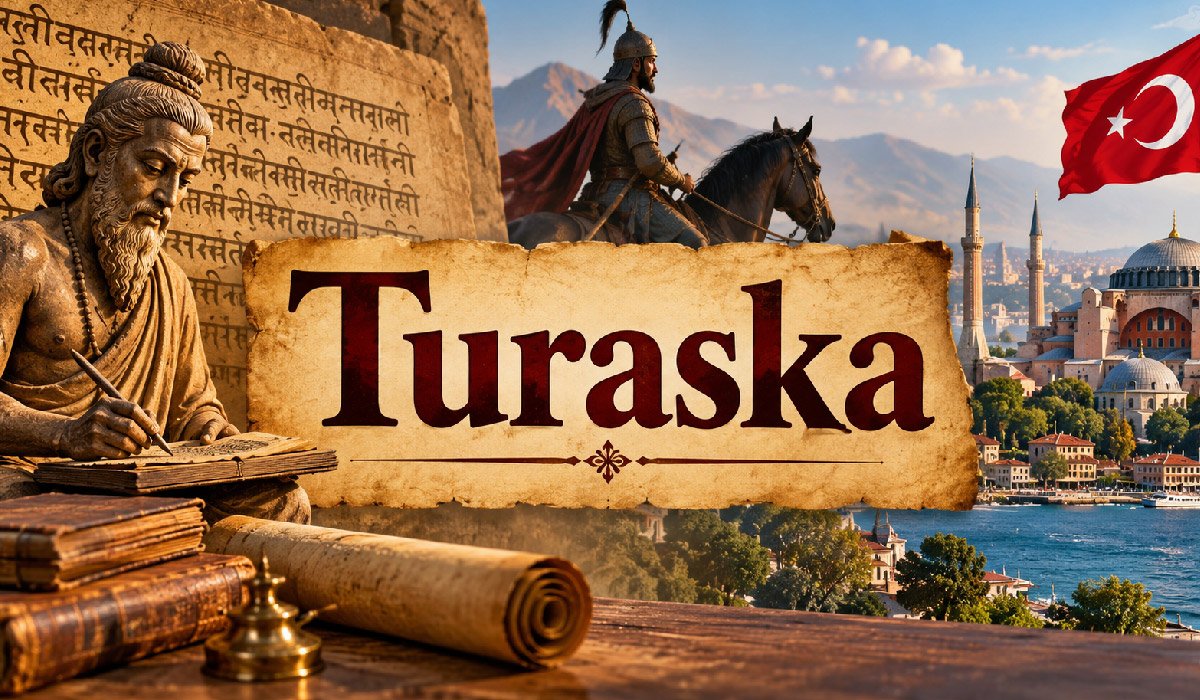
You may have found the word Turaska in an old text, a language reference, or an online article and wondered what it actually means. The confusion is understandable because the word can appear in different historical and modern contexts.
Turaska is best understood through its connection with the Sanskrit term Turuṣka, which was used for peoples associated with regions northwest of the Indian subcontinent and later became more closely connected with Turkic groups. A closely related form, তুরস্ক (Turaska), is also used in Bengali as the name for modern Turkey.
This guide explains the meaning of Turaska, its historical background, how its use changed over time, and why context matters when you encounter the word.
What Is Turaska?
Turaska can refer to a historical term connected with Turkic and Central Asian peoples, particularly when it appears as a simplified spelling of the Sanskrit Turuṣka. The term occurs in Indian literary and historical traditions and did not always describe one precisely defined modern ethnic or national group.
Its meaning depends heavily on the period and source you are reading. Earlier uses could refer more broadly to foreign peoples associated with regions beyond northwestern India, while medieval usage became increasingly connected with Turkic rulers, soldiers, and political powers.
There is also a modern linguistic meaning. In Bengali, তুরস্ক, commonly transliterated as Turaska, is the name used for Turkey. You therefore need to check the surrounding text before deciding which meaning applies.
The Sanskrit Background of Turaska
The historical discussion of Turaska usually begins with the Sanskrit form Turuṣka. Indian writers used terms like this when referring to peoples outside the cultural and geographical world most familiar to them.
You should not read such historical labels as if they were modern passport nationalities. Ancient and medieval writers often classified unfamiliar peoples according to geography, political relationships, language, religion, or broad cultural impressions.
That makes Turuṣka a historical label whose meaning could change with time. As contacts between South Asia and Central Asian political groups developed, the word became increasingly associated with people identified as Turks or with Turkic-led powers.
This changing meaning is one reason Turaska is interesting to historians and readers of old Indian texts.
Where Does the Term Turaska Appear?
Forms of Turuṣka are associated with Sanskrit and later Indian literary traditions. References are found across religious, literary, and historical writing, although the meaning should always be interpreted according to the date and context of a particular passage.
Works commonly discussed in connection with the term include the Mahabharata, Puranic literature, and later historical and literary texts such as the Rajatarangini. The word also appears in discussions of medieval encounters between Indian kingdoms and groups arriving from Central Asia and neighboring regions.
These references matter because they show that Turaska was not simply a newly invented internet expression. Its historical background is much older.
However, spelling, dating, manuscript traditions, and translation can affect how a particular occurrence is presented in modern sources.
How the Meaning Changed Over Time
The easiest way to understand Turaska is to think of it as a label whose meaning became more specific as political circumstances changed.
In earlier contexts, Turuṣka could be used within broader Indian ways of describing peoples associated with lands beyond the northwest. Such labels did not necessarily provide the detailed ethnic distinctions that a modern historian would make.
During the medieval period, encounters with Turkic-led armies and governments became much more politically important in northern India. As a result, references to Turuṣkas became more directly associated with Turks and Turkic political forces.
This is an important lesson when reading historical vocabulary. A word may survive for centuries while the people, governments, and ideas attached to it gradually change.
Turaska and Medieval Turkic Powers
The connection between Turuṣka and Turkic peoples became especially relevant during the medieval history of South Asia. Turkic-origin military and political elites played major roles in several states that interacted with or ruled parts of the Indian subcontinent.
For example, Mahmud of Ghazni conducted a series of campaigns into the subcontinent during the early eleventh century. Later, the Ghurid expansion helped create political conditions from which the Delhi Sultanate emerged in the early thirteenth century.
These developments increased contact between Indian societies and rulers or military groups associated with Turkic political traditions.
As those encounters became more frequent, older terminology could acquire stronger political meanings. Tur aska or Turuṣka therefore needs to be understood within the specific historical period in which a writer used it.
Turaska in Bengali: The Name for Turkey
There is a much simpler modern meaning of Turaska that you may encounter today.
In Bengali, তুরস্ক (Turaska) refers to the country Turkey. If you see the word in a modern Bengali sentence discussing Ankara, Istanbul, Turkish politics, geography, tourism, or international affairs, it will normally be referring to the country.
This should not be confused with every historical use of Sanskrit Turuṣka. The two forms are linguistically connected with terminology relating to Turks, but their practical uses are different.
A modern Bengali geographical name has a clear national reference. An old Sanskrit label may require much more historical interpretation.
Main Meanings of Turaska
The word becomes easier to understand when its main uses are separated:
- Historical Sanskrit usage: Turuṣka was a term associated with foreign peoples and, increasingly, Turkic or Central Asian groups.
- Medieval historical usage: The term could be connected more specifically with Turks and Turkic-led military or political powers.
- Modern Bengali usage: Turaska (তুরস্ক) is the Bengali name for Turkey.
- Modern online usage: Some websites may present Turaska as a vague new concept, brandable word, or digital term, but those claims should not replace its established linguistic and historical contexts without supporting evidence.
These differences matter because the same Roman-letter spelling can lead you toward very different explanations.
How to Understand Turaska in a Text
If you encounter Turaska while reading, you can usually work out its intended meaning with a few simple checks.
- Check the language. If the text is modern Bengali, Turaska is likely referring to Turkey.
- Look at the date. If you are reading a translation of Sanskrit or medieval Indian writing, the historical meaning is more likely.
- Read nearby names. References to Central Asian peoples, armies, rulers, or medieval kingdoms can help establish the intended meaning.
- Check the original spelling. A scholarly source may use Turuṣka rather than Tur aska. Transliteration systems can represent Sanskrit sounds differently.
- Use the source’s context. Do not assume every occurrence refers to exactly the same people. Historical labels can change meaning across different periods and authors.
These steps can prevent a simple spelling similarity from creating a misleading interpretation.
Why Understanding Turaska Is Useful
It Makes Historical Texts Easier to Read
Knowing the historical meaning of Turaska can help you understand translations and discussions of older Indian literature. Instead of treating the word as an unexplained name, you can recognize that it belongs to a wider historical vocabulary used for peoples outside or beyond familiar political communities.
Context remains essential because the meaning was not necessarily identical in every source.
It Shows How Language Changes
Turaska also provides a useful example of how words develop across centuries. A term can begin as a broad historical label, become associated with particular political groups, and survive in another language as a modern geographical name.
That process is common in language. Words rarely develop in complete isolation from migration, politics, trade, warfare, and cultural contact.
It Helps Avoid Online Confusion
Searching for an unfamiliar word can produce conflicting explanations. Turaska may sometimes be presented online as though it were simply a newly emerging brand name, creative concept, or internet trend.
A distinctive word could certainly be adopted as a modern name. However, that does not erase its older linguistic background. Checking historical and language context gives you a stronger starting point before accepting newer interpretations.
Things to Consider When Researching Turaska
The biggest limitation is that historical terminology does not always fit modern categories neatly. Calling every person described as a Turuṣka a citizen of modern Turkey would be inaccurate because modern national borders and identities did not exist in the same form.
Translations create another challenge. You may encounter spellings such as Turaska, Turushka, Turuṣka, or similar Romanized forms. Some differences result from attempts to represent sounds from Sanskrit or other South Asian languages using the Latin alphabet.
You should also be careful with websites that give the term a completely new meaning without explaining its historical background. If a source claims Tur aska is a particular platform, technology, company, or product, look for direct evidence supporting that specific claim.
Turaska Compared With Related Terms
Turaska is related to words associated with Turks, but these terms should not automatically be treated as interchangeable.
Turk generally refers to a person belonging to the Turkish people or, depending on historical context, members of broader Turkic populations. Turkic is wider and refers to a family of related peoples and languages spread across a large part of Eurasia.
Turkey is a modern country. Bengali Turaska (তুরস্ক) is simply its Bengali name.
Historical Turuṣka, meanwhile, belongs to a much older South Asian vocabulary. Its exact reference depends on who wrote the text, when it was written, and what people or political group the author was describing.
Final Thoughts
Turaska is best understood as a word with both historical and modern linguistic uses. Its historical form, Turuṣka, appears in Indian traditions in connection with peoples from beyond the northwestern regions and later developed a stronger association with Turkic groups and powers.
In modern Bengali, Turaska (তুরস্ক) has a much clearer meaning: Turkey. Keeping these uses separate makes the term far easier to understand.
If you encounter Turaska in a book or online article, check the language, date, original spelling, and surrounding discussion first. Those clues will usually tell you whether you are dealing with an ancient historical label, a medieval reference, or the modern country name.
(FAQs)
What does Turaska mean?
Turaska has different meanings depending on context. Historically, it is associated with the Sanskrit Turuṣka, a term used in connection with foreign and particularly Turkic or Central Asian peoples. In modern Bengali, তুরস্ক (Turaska) is the standard name for Turkey.
Is Turaska another name for Turkey?
Yes, in modern Bengali, Turaska (তুরস্ক) means Turkey, the country located between southeastern Europe and western Asia. However, historical Sanskrit uses of Turuṣka should not automatically be translated as modern Turkey because they come from periods before today’s national boundaries existed.
Is Turaska a modern brand or digital platform?
The word could be adopted as a brand or project name, just as many historical words can. However, Turaska also has an established linguistic and historical background. Claims that it represents a particular modern platform, service, or technology should be checked against reliable information about that specific entity.
Is Turaska the same as Turuṣka?
Turaska can appear as a simplified Roman spelling connected with Turuṣka, although transliteration varies between sources and languages. Turuṣka is the form commonly encountered in discussions of Sanskrit terminology. Always check the original language and source when precise historical interpretation matters.
How should I research the meaning of Turaska?
Start by identifying where the word appears. Check whether the material is modern Bengali, Sanskrit-related scholarship, or a medieval historical text. Then look at the surrounding people, places, and dates. This approach is more reliable than assuming every use of Turaska carries exactly the same meaning.
Latest News And Amazing News. Visit: Insider Zine