
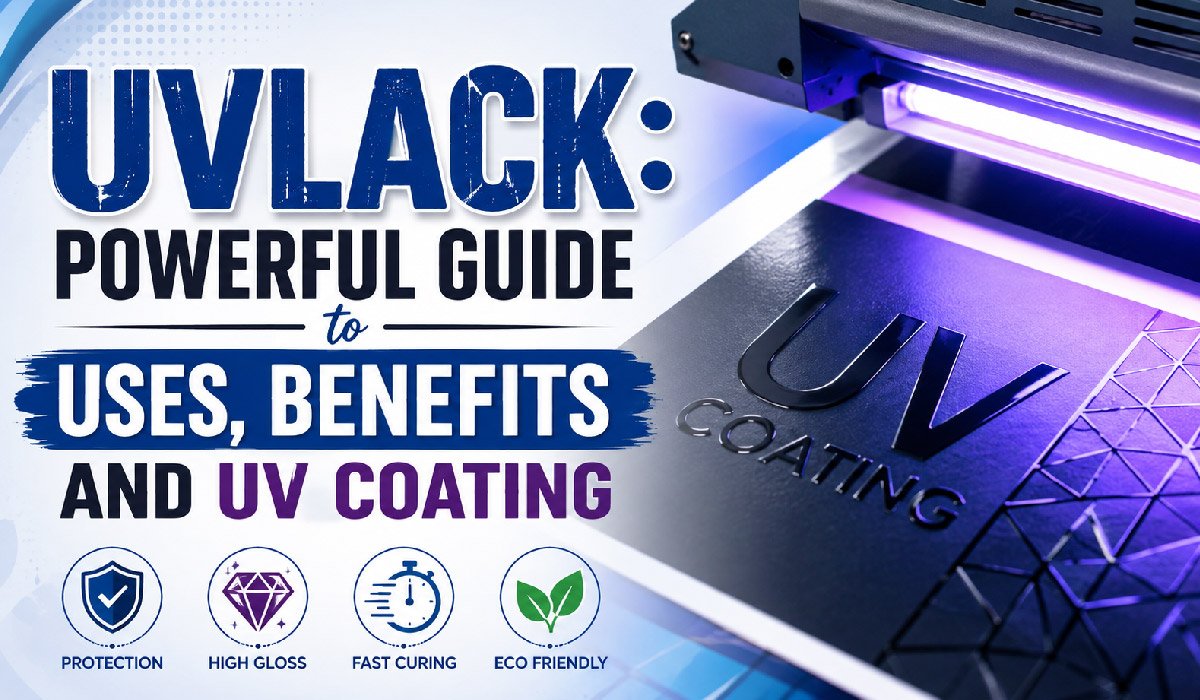
Uvlack is a modern surface coating that uses ultraviolet light to create a hard and protective finish. It is often called UV-Lack, UV varnish, UV lacquer, or UV coating. Unlike many traditional coatings that need time to dry naturally, Uvlack can cure very quickly when it receives the correct amount of UV energy.
This fast curing process makes Uvlack useful in printing, packaging, furniture production, wood finishing, and several industrial processes. Depending on the formulation, the finished coating can provide a glossy, matte, or satin appearance while helping the surface resist scratches, handling, moisture, and everyday wear.
However, choosing and applying a UV coating requires proper knowledge. The surface, coating formula, application method, and curing equipment must work together. This guide explains what Uvlack means, how it works, where it is used, its advantages and limitations, and what to consider before choosing it.
What Is Uvlack?
Uvlack is a coating designed to cure when exposed to ultraviolet light. The word is commonly connected with UV varnish or UV lacquer. It is applied as a liquid coating over a suitable material and then passed under a UV light source, where a chemical reaction changes the coating into a solid protective film.
The exact properties of Uvlack depend on its formulation. Some products are designed mainly to produce a bright and attractive finish, while others focus more on hardness, scratch resistance, flexibility, or protection from chemicals. Manufacturers can also produce matte, satin, and high-gloss versions for different visual effects.
Uvlack should not be treated as one universal coating for every surface. Different materials need different formulations. Paper, cardboard, plastic, wood, and metal can behave differently during coating and curing. For this reason, manufacturers normally select UV varnishes according to the substrate, production process, and required final performance.
Meaning and Origin of the Term Uvlack
Understanding the name Uvlack helps explain what the product does. The first part, “UV,” stands for ultraviolet. Ultraviolet radiation is a form of electromagnetic radiation with wavelengths shorter than visible light. In UV-curing systems, suitable wavelengths provide the energy needed to start the coating’s curing reaction.
The second part, “Lack,” is connected with European terminology for lacquer, paint, or varnish. German, for example, uses the word “Lack” for several types of coatings. This is why terms such as UV-Lack, UV Lack, and Uvlack can appear when people discuss ultraviolet-curable finishes.
In English-language industries, UV coating, UV varnish, and UV lacquer are generally more familiar descriptions. The exact terminology can vary according to country, manufacturer, and application. Therefore, readers should pay more attention to a product’s technical specifications than its name alone when choosing a coating.
How Does Uvlack Work?
Uvlack works through a process called UV curing. Before curing, the coating is applied in a liquid form that can spread across the intended surface. The coating contains light-sensitive ingredients that respond when they receive suitable ultraviolet energy. This begins a rapid chemical reaction within the coating.
Photoinitiators play an important role in this reaction. They absorb UV energy and create reactive species that start polymerization. Reactive components in the formulation then connect to form a strong polymer network. As this network develops, the liquid coating changes into a hardened surface film.
The process can happen very quickly under correctly controlled conditions. However, successful curing depends on several factors, including the formulation, coating thickness, lamp output, wavelength, exposure time, and production speed. If the coating does not receive suitable curing energy, its hardness, adhesion, appearance, or resistance may not meet the required standard.
What Is Uvlack Made From?
A typical UV-curable coating contains several ingredients that work together. Resins or oligomers help create the main structure and influence properties such as hardness, flexibility, adhesion, and resistance. Reactive diluents can help control viscosity while also becoming part of the cured coating during polymerization.
Photoinitiators are another important part of many UV formulations. They respond to particular ranges of ultraviolet energy and start the curing reaction. Manufacturers carefully choose them according to the chemistry of the coating and the UV system that will be used during production.
Additional ingredients can change specific properties of Uvlack. These additives may help control flow, gloss, surface feel, adhesion, stability, or resistance to wear. The exact formula varies widely between products. A coating developed for printed cardboard, for example, may have different requirements from one designed for wooden flooring or an industrial component.
Uvlack Application and Curing Process
Good application begins with surface preparation. Dust, oil, grease, moisture, and other contamination can prevent the coating from bonding correctly. Depending on the substrate, cleaning, sanding, priming, or sealing may be required before Uvlack is applied. Proper preparation also helps create a smooth and even appearance.
The coating can be applied using different industrial methods. Rollers are useful for many flat materials, while spraying can coat more complicated shapes. Screen and other printing methods can place UV varnish on selected areas. The correct technique depends on the material, desired coating thickness, design, and production system.
After application, the material enters the curing stage. UV lamps or compatible UV-LED systems expose the coating to controlled energy. Once cured, the surface can be inspected for hardness, adhesion, gloss, uniformity, and visible defects. Careful control during both application and curing is important for consistent results.
Different Types and Finishes of Uvlack
Uvlack can produce several types of surface appearance. High-gloss UV varnish creates a shiny finish that can make colors appear deeper and more noticeable. This effect is especially popular for packaging, printed covers, promotional materials, and products where visual presentation is an important part of the design.
Matte Uvlack creates a softer and less reflective surface. It is often selected when manufacturers want a restrained or modern appearance. Satin finishes sit between gloss and matte and can provide a gentle shine without the stronger reflection associated with high-gloss coatings.
UV coatings can also be designed for particular performance needs. Some formulations focus on abrasion resistance, while others may provide greater flexibility, chemical resistance, or specific surface characteristics. Spot UV is another important technique in printing. Instead of coating the complete sheet, varnish is applied to selected areas to create contrast between different parts of the design.
Where Is Uvlack Used?
One reason Uvlack is important is its ability to serve many manufacturing sectors. Printing and packaging are major examples. UV varnish can be applied to labels, brochures, book covers, business cards, cartons, and other printed materials to improve their appearance and help protect them from repeated handling.
Wood and furniture manufacturers can also use compatible UV-curable systems. Factory-finished panels, cabinets, furniture parts, and flooring products can benefit from fast curing and consistent production. The required coating system depends on the type of wood, preparation method, desired appearance, and expected level of wear.
Other industrial applications can include suitable plastic or metal components and decorative manufactured products. However, a coating designed for one industry should not automatically be used in another. Every application has different requirements for adhesion, flexibility, hardness, appearance, chemical resistance, and environmental exposure.
Uvlack in Printing and Packaging
Printing is one of the best-known areas for UV varnish. A clear coating can be placed over printed ink to provide additional visual depth and surface protection. High-gloss UV coatings are particularly useful when designers want colors, photographs, or graphics to appear more vivid on suitable printed materials.
Spot UV provides a different effect. Instead of covering everything, the coating is placed over selected elements such as a logo, image, pattern, or text. The contrast between shiny and uncoated or matte areas can create an attractive visual and tactile effect. This technique is often seen on premium packaging and printed marketing materials.
Successful UV finishing still requires compatibility between the coating, ink, and substrate. Problems can occur when these elements do not work together correctly. Testing is therefore important, especially when changing paper, ink systems, coating formulations, or curing conditions during commercial production.
Uvlack for Wood and Furniture
UV-curable coatings can be particularly useful for factory-produced wood products because curing can be integrated into an automated production line. Instead of leaving coated pieces for long drying periods, manufacturers can move suitable products through controlled application and curing stages, helping improve production speed and consistency.
Wood preparation remains extremely important. Sanding can help create a suitable surface, while sealers or primers may be used as part of a complete finishing system. The correct approach depends on the wood, coating chemistry, desired finish, and manufacturing process. Poor preparation may cause adhesion or appearance problems.
UV finishes can be used on suitable furniture components, panels, cabinets, flooring, and other manufactured wood surfaces. However, indoor and outdoor conditions are different. A coating used successfully on indoor furniture is not automatically suitable for continuous sunlight, rain, or temperature changes. Outdoor products require systems specifically designed for those conditions.
Main Benefits of Uvlack
Speed is one of the main advantages of Uvlack. Traditional finishes may require significant drying time before a product can move to another production stage. UV curing can greatly shorten this stage because the coating hardens rapidly under the correct curing conditions. This makes the technology valuable for high-volume manufacturing.
Durability is another important benefit. Properly formulated and cured coatings can provide resistance to scratching, abrasion, handling, and certain chemicals. The exact level of protection depends on the product. UV coatings can also provide excellent control over appearance, allowing manufacturers to create glossy, matte, satin, or selected decorative effects.
There can also be production and environmental advantages. Some UV-curable formulations use little or no conventional solvent compared with certain solvent-based systems, which can reduce VOC emissions. However, environmental performance varies, so every UV product should be evaluated according to its actual formulation and production requirements.
Limitations and Common Uvlack Problems
Uvlack has useful properties, but it also presents technical challenges. A UV-curing line requires suitable equipment, which can increase initial investment. Manufacturers must match the curing equipment with the coating chemistry. Simply exposing any coating to a UV lamp does not guarantee that it will cure correctly.
Surface compatibility can create additional problems. Poor preparation, contamination, unsuitable substrates, excessive coating thickness, or incorrect curing conditions may result in weak adhesion or an uneven finish. Depending on the formulation and process, other issues can include brittleness, insufficient hardness, yellowing, or incomplete curing.
Complex shapes can be more difficult to cure than flat surfaces because UV energy must reach the coated area effectively. Shadowed sections may receive less exposure. These limitations explain why process testing is important. When a defect appears, operators should examine the substrate, coating, application method, and curing conditions together rather than focusing on only one factor.
Uvlack vs Regular Varnish and Lamination
Uvlack, traditional varnish, and lamination can all improve a finished surface, but they work differently. UV varnish creates a cured coating directly on the substrate. Its major advantage is rapid curing when the formulation and equipment are correctly matched, making it useful for production environments where speed is important.
Traditional varnishes use different drying or curing mechanisms depending on their chemistry. Some may be easier to apply with simpler equipment, but drying can take longer. They can still provide useful appearance and protection, making them suitable for applications where UV-curing equipment is unnecessary or unavailable.
Lamination is different because a separate film is normally bonded to the printed or manufactured surface. It can provide strong physical protection but adds another material layer. The best choice therefore depends on desired appearance, durability, production speed, substrate, equipment, cost, and final use rather than one option always being better.
Environmental and Safety Considerations
UV-curable technology can offer environmental advantages in certain applications, particularly when it reduces dependence on conventional solvent-heavy coatings. Because many UV systems contain reactive materials that become part of the cured film, some formulations can produce lower VOC emissions than traditional solvent-based alternatives. This benefit should still be assessed product by product.
Safety is equally important. Workers should avoid unnecessary exposure to ultraviolet radiation from curing equipment. Proper shielding, protective equipment, operating procedures, and maintenance are important. Uncured coating materials also need careful handling because their ingredients may require skin, eye, or other exposure precautions.
Ventilation, storage, spill control, and waste disposal should follow the coating manufacturer’s safety information and applicable workplace rules. Fully cured material and uncured liquid should not automatically be treated in the same way. Responsible handling throughout the process helps manufacturers gain the production benefits of UV technology while reducing avoidable risks.
How to Choose the Right Uvlack
Choosing Uvlack should begin with the material that needs to be coated. Paper, cardboard, wood, plastic, and metal have different surface characteristics. A formulation that bonds well to one substrate may perform poorly on another. Checking manufacturer specifications and carrying out compatibility tests can prevent expensive production problems.
The intended use is equally important. A decorative printed product may mainly require excellent gloss and visual clarity. Flooring or furniture may require stronger abrasion resistance. Other industrial surfaces might need flexibility or resistance to particular chemicals. Outdoor products can require additional resistance to weather and prolonged sunlight.
Existing equipment must also be considered. A coating needs to be compatible with the application and curing system being used. Production speed, coating thickness, desired finish, safety requirements, and total operating cost should all influence the decision. Small-scale testing before full production is usually a sensible approach.
Maintenance and Expected Lifespan of Uvlack
A properly selected and cured UV coating can remain attractive for a long period, but there is no single lifespan that applies to every Uvlack surface. Durability depends on the formulation, substrate, coating thickness, quality of curing, frequency of use, environmental exposure, cleaning methods, and the type of wear the surface receives.
Regular cleaning can help maintain its appearance. Cleaning products should be suitable for both the coating and underlying material. Strong solvents, abrasive powders, or rough cleaning tools should not be used unless the coating manufacturer confirms compatibility. Aggressive cleaning can gradually damage some finishes or change their appearance.
Repair or recoating may be possible for certain UV-coated surfaces. However, a fully cured finish can require sanding or another preparation method before a new layer can bond successfully. Professional recommendations are especially useful when refinishing furniture, flooring, or valuable manufactured components.
Future of Uvlack and UV Coating Technology
UV coating technology continues to develop as manufacturers look for faster, more efficient, and more specialized finishing methods. One important area is UV-LED curing. LED systems can provide advantages such as lower heat output, efficient operation, and long light-source life in suitable applications, although coatings must be formulated to cure under the wavelengths produced by the system.
Coating chemistry is also developing. Manufacturers continue working on formulations that improve scratch resistance, flexibility, surface feel, stability, and other functional properties. Anti-fingerprint and specialized decorative surfaces are examples of features that can be developed for particular markets rather than being standard properties of all Uvlack products.
Environmental performance will remain an important area of development as well. Improvements in coating chemistry and curing equipment may help manufacturers reduce energy use, emissions, and production waste while maintaining the fast processing and surface performance that make UV curing attractive.
Final Thoughts
Uvlack is an important modern coating technology that combines rapid UV curing with decorative and protective surface properties. Commonly associated with UV varnish, UV lacquer, or UV coating, it can be used on suitable printed materials, packaging, wood products, furniture components, and various manufactured surfaces. Its fast curing makes it particularly valuable in efficient production lines.
However, the quality of a UV finish depends on much more than the coating itself. Surface preparation, formulation, coating thickness, application equipment, UV wavelength, curing energy, and production speed all influence the final result. Choosing a product designed for the intended substrate and environment is therefore essential.
As UV and UV-LED technologies continue to improve, Uvlack systems are likely to remain useful for manufacturers seeking fast production, controlled appearance, and dependable surface performance. Proper selection, testing, curing, maintenance, and safe handling are the keys to achieving reliable results.
FAQs
What is Uvlack used for?
Uvlack is used to create a protective and attractive finish on suitable surfaces. Common applications include printing, packaging, wood products, furniture components, labels, cards, and various industrial products.
How does Uvlack work?
Uvlack contains ingredients that react to suitable ultraviolet light. UV energy starts a chemical curing process that changes the applied liquid coating into a solid, durable surface film.
Is Uvlack better than regular varnish?
Uvlack can be better when fast curing and efficient production are important. Regular varnish may be more practical when UV curing equipment is unavailable. The right choice depends on the surface and application.
Can Uvlack be used on wood and furniture?
Yes. Compatible Uvlack formulations can be used on furniture, cabinets, panels, flooring, and other wood products. Proper surface preparation and correct UV curing are important for reliable adhesion and durability.
Is Uvlack safe to use?
Uvlack can be used safely when the manufacturer’s handling and curing instructions are followed. Workers should use suitable protection and avoid direct UV exposure and unnecessary contact with uncured coating materials.
Latest News And Amazing News. Visit: Insider Zine