

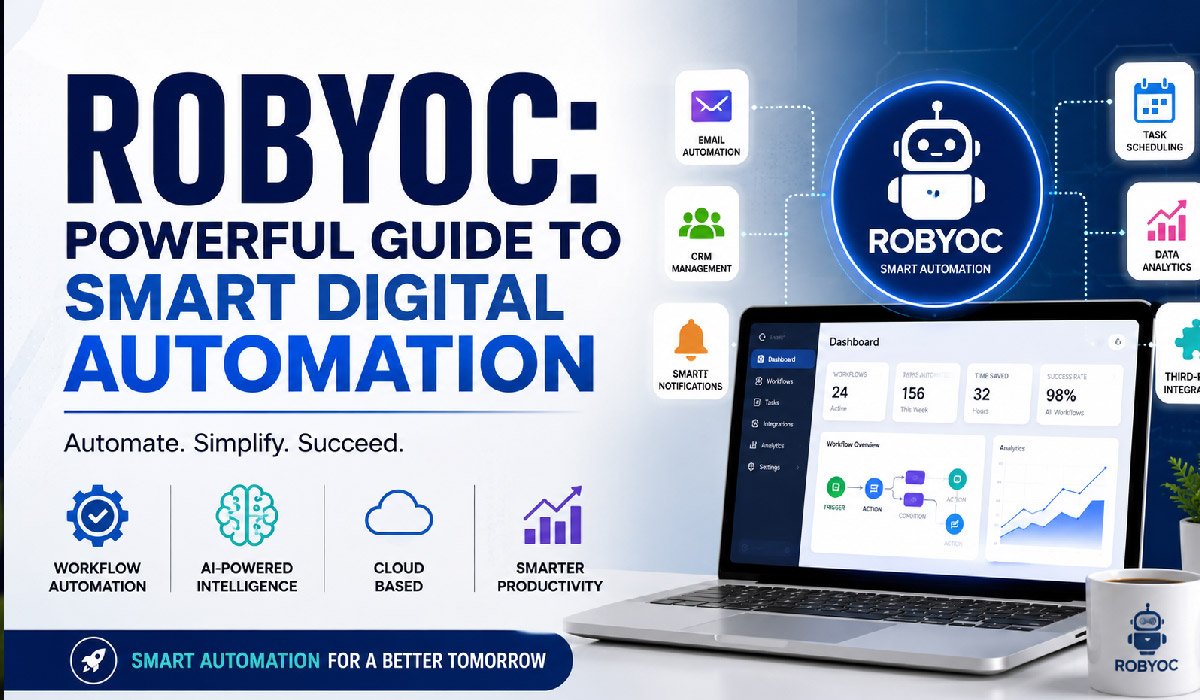
Robyoc is a modern digital automation concept that combines artificial intelligence, workflow automation, and simple digital tools. Its main purpose is to reduce repetitive online work and make everyday processes easier to manage. Instead of completing the same actions manually again and again, users can create workflows that perform selected tasks automatically.
The term can be understood in two connected ways. First, Robyoc describes an automation approach inspired by robotics logic, where digital actions follow organized rules and processes. Second, Robyoc is associated with an online platform designed to put these automation ideas into practical use.
This combination makes Robyoc relevant to businesses, marketers, creators, entrepreneurs, and individuals interested in digital productivity. Rather than focusing on physical robots, it applies automation principles to software and online activities. Its broader goal is to save time, organize workflows, and make intelligent automation easier for non-technical users.
Robyoc Meaning and Origin
The meaning of Robyoc becomes easier to understand when the name is connected with its automation purpose. The first part, “robo,” naturally suggests robotics, automated processes, precision, and repeated actions. These ideas have long been associated with machines that perform structured tasks without requiring constant human involvement.
The second part, “yoc,” appears to work more as a distinctive part of the name than as a widely recognized technical term. Together, the name reflects the idea of bringing robotics-style efficiency into digital environments. Instead of a physical machine completing factory work, software handles repeated online activities.
The concept fits closely with current changes in technology. Artificial intelligence is becoming more capable, while no-code tools are making automation accessible to people without programming knowledge. Businesses and individuals also use more digital services than before. Robyoc reflects this movement toward simpler systems that connect tasks, information, and automated actions.
Why Robyoc Is Gaining Attention
Robyoc is gaining attention because digital work increasingly involves many small and repetitive tasks. Businesses may need to update customer records, answer common messages, organize leads, monitor inventory, or manage marketing activities. Creators and individuals face similar challenges when scheduling content, organizing files, or keeping track of routine responsibilities.
At the same time, users are becoming less interested in complicated software that requires advanced technical knowledge. No-code platforms have changed expectations by allowing people to build useful digital processes through simpler interfaces. AI has added another layer by helping systems analyze information and support more intelligent actions.
Robyoc fits into these wider trends by focusing on accessible automation. The idea is not simply to automate everything. Instead, it is to identify predictable tasks that consume unnecessary time and allow software to handle them consistently. This can leave users with more time for decisions, creative work, customer relationships, and other activities requiring human attention.
How Robyoc Works
Robyoc works by turning a normal digital process into a sequence of automated actions. A workflow usually begins with a trigger. A trigger is an event that tells the system when to start. For example, receiving a new customer inquiry, adding a lead, reaching a scheduled time, or recording a new order could begin an automated process.
After the trigger occurs, the system follows predefined actions. It might organize information, create a task, send an email, issue a notification, or update another connected process. Conditions can also determine what happens next. This allows different actions to occur depending on the available information.
Artificial intelligence can make this type of automation more flexible. Instead of relying entirely on fixed instructions, AI-supported processes can recognize patterns, analyze information, recommend actions, and potentially adapt workflows. The overall purpose remains simple: reduce repeated manual work while keeping digital processes organized and consistent.
Core Technology Behind Robyoc
Several technologies work together within the Robyoc concept. Workflow automation provides the basic structure. It connects triggers, conditions, and actions so that tasks can move through a predefined process. This allows software to complete routine activities automatically instead of waiting for a person to perform every step.
Artificial intelligence adds another level of capability. AI can analyze information, recognize patterns, and support recommendations. Machine learning may also help automated systems improve their responses as they process more relevant data. Data synchronization is equally important because different stages of a workflow need consistent and accurate information.
Cloud technology supports online accessibility. Users can work through a browser instead of depending entirely on locally installed software. No-code design also reduces technical barriers by allowing workflows to be created through visual controls rather than traditional programming. Together, these technologies form the foundation of an accessible intelligent automation environment.
Main Features of Robyoc
Robyoc focuses on features that help users build, control, and understand automated workflows. A workflow builder is central to this approach because it allows users to define what starts a process and what should happen afterward. The no-code structure is particularly useful for people who do not have software development experience.
Automation can also support scheduling, notifications, data handling, and repeated digital actions. Analytics are useful because users need to understand whether their automated processes are producing the expected results. Integrations can further expand automation by allowing information and actions to move between different online tools or services.
Another important part of the system is usability. Powerful automation has limited value when ordinary users cannot understand how to configure it. Robyoc therefore emphasizes a simpler interface and manageable learning curve. The combination of workflow management, automation, AI-supported functions, and accessible controls is intended to make digital processes easier to organize.
What Is Robyoc.online?
Robyoc.online is presented as the web-based side of the broader Robyoc automation idea. Instead of requiring complicated local installations, an online platform can allow users to access automation tools directly through a browser. This approach also makes it easier to use the system from different compatible devices and receive platform updates without manually installing new software.
The platform is associated with workflow creation, marketing automation, website-related processes, analytics, and connections with other digital services. These functions are designed around the same central idea: allowing users to organize routine online activities and reduce unnecessary manual actions.
It is useful to distinguish Robyoc as a concept from Robyoc.online as a specific web presence. The broader term describes an approach to intelligent digital automation, while the online platform represents a practical application of that approach. This distinction can help readers understand why the name appears in different automation-related contexts.
What Can Robyoc Be Used For?
Robyoc can be applied to many situations where digital tasks follow predictable patterns. In a business setting, automation may help manage customer information, update records, send routine messages, create reminders, or notify staff when an important event occurs. These actions can reduce the administrative workload created by repeated manual processes.
Marketing provides another useful example. Businesses can organize email sequences, schedule activities, manage leads, and track campaign information through structured workflows. Content creators can use similar processes to organize publishing schedules and manage repeated steps connected with producing and distributing content.
Automation can also support personal productivity. Individuals may use structured digital workflows for reminders, scheduling, file organization, and recurring tasks. The exact application depends on the user’s needs. The strongest use cases are usually activities that happen regularly, follow clear steps, and do not require a completely new human decision every time.
How Businesses Can Use Robyoc
Businesses often perform hundreds of small digital actions that individually take only a few minutes but collectively consume significant time. Robyoc can help organize these activities into automated workflows. For example, a new customer inquiry could automatically create a record, notify the responsible person, and start an appropriate follow-up process.
Customer relationship management is another possible area. Businesses need to maintain organized lead information and communicate consistently with potential customers. Automation can help move information through these processes without requiring employees to manually update every stage. Inventory alerts can similarly notify staff when attention is required.
Marketing teams can use automated processes for campaign scheduling, lead nurturing, and performance tracking. Customer service teams may automate simple and repetitive interactions while keeping complex issues for human staff. Used carefully, Robyoc does not remove the need for employees. Instead, it can reduce routine administrative work and support more consistent business operations.
Robyoc for Personal Productivity
Automation is not limited to companies. Individuals also manage repeated digital tasks every day, including reminders, schedules, documents, messages, and personal projects. Robyoc can support personal productivity by turning some of these predictable activities into structured processes that require less repeated manual attention.
For example, a user may create automated reminders for recurring responsibilities or organize information according to predefined rules. Scheduling automation can help maintain routines, while structured file processes can reduce digital clutter. These small improvements may become valuable when a person manages many responsibilities across several online tools.
The main advantage is not simply doing more work. Good personal automation reduces unnecessary actions so that users can focus on tasks requiring judgment, creativity, or direct attention. However, users still need to review important workflows. Automation works best when the process is clearly understood first and only suitable repetitive steps are handed over to software.
Robyoc and Artificial Intelligence
Artificial intelligence gives modern automation capabilities that traditional rule-based systems may not provide. Basic automation normally follows direct instructions: when one event occurs, perform a specific action. This approach works well for predictable processes but becomes less flexible when information varies or a decision requires some form of analysis.
AI can support automation by recognizing patterns, examining data, producing recommendations, and helping determine suitable next actions. Predictive automation can potentially use previous information to anticipate what may be needed. This creates workflows that are more responsive than simple fixed sequences.
However, AI and automation should not be treated as identical concepts. A workflow can be automated without using artificial intelligence. AI becomes valuable when analysis, recognition, recommendations, or adaptive behavior are needed. Robyoc connects these two areas by combining structured workflow execution with intelligent assistance, creating an approach designed to make digital processes both efficient and more responsive.
Robyoc vs Traditional Automation
Traditional automation usually works through predefined rules. A user or technical team decides exactly what should happen when a certain condition is met, and the software repeatedly follows those instructions. This approach can be dependable for stable processes, but changing circumstances may require the workflow to be manually adjusted.
Robyoc takes a more user-focused approach by combining workflow automation with artificial intelligence and simpler configuration. Instead of making technical complexity the central part of the experience, the concept emphasizes accessibility. AI-supported analysis can also add flexibility where basic automation would otherwise depend only on fixed instructions.
The difference does not mean traditional automation is outdated. Fixed automation can be highly effective when a task is predictable and rarely changes. Intelligent automation becomes more useful when workflows involve changing information or recommendations. The appropriate choice therefore depends on the process, required flexibility, available skills, and level of control a user needs.
Robyoc vs RPA
Robotic Process Automation, commonly called RPA, is designed to automate repetitive digital activities that follow structured rules. RPA systems can reproduce actions that a person would normally perform through software, making them useful for tasks such as data entry, information transfers, and other predictable business processes.
Robyoc shares the goal of reducing repetitive work but places stronger emphasis on accessibility and AI-assisted workflows. Traditional RPA implementations may involve technical teams, especially when processes are large or complex. Robyoc instead focuses on making workflow creation understandable for a wider range of users through a simpler, no-code approach.
The two should not automatically be viewed as direct replacements for each other. RPA can remain valuable for structured enterprise processes, while an accessible intelligent automation approach may suit smaller businesses, marketers, creators, or individual users. The better option depends on workflow complexity, technical requirements, scale, integrations, and desired flexibility.
Benefits of Using Robyoc
One of the main benefits of Robyoc is time efficiency. Repetitive tasks can take considerable time when performed manually every day. Automating suitable activities allows users to spend less time repeating predictable actions and more time handling work that requires creativity, communication, planning, or judgment.
Consistency is another important advantage. People can forget steps, delay routine updates, or enter information incorrectly when managing many tasks. A correctly configured automated workflow follows the same process each time. This can improve organization and reduce certain manual errors, although automation still needs proper setup and monitoring.
Accessibility also makes Robyoc appealing. No-code design can lower the barrier for users who want automation without becoming programmers. Businesses may also reduce the need to use separate tools for every small process when compatible activities can be organized into connected workflows. The practical value ultimately depends on how effectively automation is configured.
Limitations and Considerations
Robyoc also has limitations that users should consider before relying heavily on automation. Online automation platforms depend on reliable internet access and compatible services. If a connection, integration, or external platform stops working, the automated process may also be interrupted. This makes monitoring important even when workflows normally operate without manual input.
Complexity can create another challenge. Simple workflows are usually easier to automate, while complicated business processes may involve exceptions that are difficult to represent through basic rules. Highly technical organizations may therefore require more specialized enterprise systems or additional tools alongside a simpler automation platform.
Automation can also repeat mistakes very efficiently. If a workflow is configured incorrectly, the same incorrect action may occur many times. Users should therefore test processes before using them widely. Human oversight remains important, especially for sensitive information, financial decisions, customer issues, and situations requiring context, empathy, or professional judgment.
Is Robyoc Safe to Use?
Security is an important consideration whenever an automation platform handles business information or connects with other online services. Users should understand what information a platform can access, how that information is handled, and which permissions are granted to connected applications. Sensitive workflows require greater care than simple reminders or scheduling tasks.
Privacy policies can provide useful information about data collection, storage, sharing, and account management. Users should also examine available security controls and avoid granting unnecessary permissions. When integrations connect several services, the security of the complete workflow matters because information may move between different systems.
No online platform should be considered safe simply because it offers automation or AI features. Users should evaluate current security information, privacy terms, account protections, and data-handling practices before sharing sensitive information. Strong passwords, secure authentication, careful permission management, and regular workflow reviews can further reduce avoidable risks.
How to Start Using Robyoc
A good way to begin with Robyoc is to identify one simple task that happens repeatedly. Trying to automate an entire business process immediately can create unnecessary complexity. A small and predictable workflow makes it easier to understand how triggers, conditions, and actions work together.
The next step is to determine what should start the automation and what should happen afterward. For example, a new inquiry might trigger a notification and create a follow-up task. Users can then connect the required services, define relevant rules, and test the process with sample information before depending on it for real activities.
Testing is especially important because an automated workflow may behave differently from what the creator expected. After activation, users should monitor results and correct unnecessary or inaccurate steps. Automation should improve gradually. Starting with simple processes, measuring their usefulness, and expanding only when needed creates a more controlled approach to digital workflow management.
Example of a Robyoc Workflow
A small online store provides a simple example of how Robyoc automation could work. Imagine that a customer submits an order or inquiry through the store’s website. Without automation, the owner might need to copy customer information, send a confirmation message, create a follow-up reminder, and update internal records manually.
With an automated workflow, the new submission acts as the trigger. Customer information can move into the appropriate process, a message can be sent, and a notification can alert the owner. If inventory reaches a selected level, another workflow could create an alert so that stock receives attention before it becomes unavailable.
The value comes from connecting several predictable actions into one process. The owner still handles important decisions and unusual customer situations. However, routine steps no longer need the same amount of repeated attention, helping the business maintain a more organized and consistent workflow.
Who Should Use Robyoc?
Robyoc is most relevant to people who regularly perform predictable digital tasks and want a simpler way to organize them. Small business owners can use automation to reduce routine administration. Entrepreneurs may benefit when managing several responsibilities with limited staff, while marketing teams can organize repeated campaign and lead-management processes.
Creators and freelancers can also benefit from workflow automation. Content schedules, project reminders, information organization, and recurring digital activities can become easier to manage when predictable steps are connected. Non-technical users may find the no-code approach especially useful because it reduces dependence on traditional programming skills.
However, Robyoc may not suit every situation. Large organizations with highly specialized systems, strict infrastructure requirements, or deeply customized processes may need enterprise-level automation solutions. The best users are those who can clearly identify repetitive tasks and want accessible automation without making their workflows unnecessarily complicated.
Common Misunderstandings About Robyoc
One common misunderstanding is that Robyoc refers to physical robotics. Although its automation philosophy is connected with robotics-style logic, its focus is digital. The goal is to allow software to complete structured online activities rather than create physical machines that perform mechanical work.
Another misunderstanding involves artificial intelligence. AI and automation are often discussed together, but they are not the same technology. A basic automated workflow can operate entirely through predefined rules. AI becomes useful when a system needs analysis, recommendations, pattern recognition, or more adaptive behavior. Not every automated task requires intelligent processing.
It is also useful to distinguish the general Robyoc concept from claims about a specific online platform. Broad automation principles can explain how the idea works, but individual platform features, security measures, integrations, and capabilities need to be evaluated separately. Keeping these distinctions clear makes the term easier to understand.
Future of Robyoc and Intelligent Automation
The future of Robyoc is closely connected with the wider development of artificial intelligence and digital automation. Automation systems are moving beyond simple trigger-and-action processes toward tools capable of analyzing information and supporting more complex decisions. Agentic AI could further increase the ability of software to complete multi-step digital activities with less constant human direction.
Natural-language controls may also make automation easier. Instead of manually configuring every technical rule, users may increasingly describe what they want a system to accomplish in ordinary language. Better integrations could connect business applications, communication tools, analytics, and other digital services more smoothly.
Human involvement will still remain important. More capable automation creates questions about privacy, accuracy, security, accountability, and appropriate use. The strongest future systems are therefore likely to focus on collaboration rather than simply replacing human activity. Robyoc represents this broader movement toward automation that supports people while reducing unnecessary repetitive digital work.
Final Thoughts
Robyoc represents an approach to digital automation that brings together structured workflows, artificial intelligence, and accessible design. Its central idea is easy to understand: repetitive digital activities can often be handled by software, allowing people to spend more time on tasks that require human attention. This makes the concept relevant to businesses, creators, marketers, entrepreneurs, and individuals.
Its usefulness depends on choosing the right tasks to automate. Simple and predictable processes are generally easier to manage, while complex or sensitive decisions still benefit from human review. Security, privacy, integrations, and workflow accuracy should also remain part of the decision-making process.
As AI and no-code technology continue developing, intelligent workflow automation is likely to become increasingly accessible. Robyoc fits within that shift by emphasizing simpler digital processes, reduced manual repetition, and better organization. Its long-term value will depend on how effectively these ideas are applied in practical situations.
FAQs
What is Robyoc?
Robyoc is a digital automation concept that combines artificial intelligence, workflow automation, and simple design. It aims to reduce repetitive online tasks and help businesses, creators, and individuals organize digital processes more efficiently.
How does Robyoc work?
Robyoc uses triggers, rules, and automated actions to manage digital workflows. When a specific event happens, the system can automatically perform selected tasks, such as sending notifications, organizing information, or creating follow-up actions.
What is Robyoc used for?
Robyoc can be used for business automation, marketing workflows, customer management, scheduling, reminders, content organization, and other repetitive digital tasks. Its main purpose is to save time and simplify everyday online processes.
Do I need coding skills to use Robyoc?
Robyoc focuses on a simple, no-code approach designed for non-technical users. This makes workflow automation easier for beginners, small business owners, marketers, creators, and people who do not have programming experience.
Is Robyoc safe to use?
Users should check Robyoc’s current privacy policy, security practices, permissions, and data-handling terms before connecting sensitive information. Strong passwords, careful permission management, and regular reviews can also help improve account security.
Latest News And Amazing News. Visit: Insider Zine